• Home
  • Latest Podcast
  • About
  • Contact
    • News Bits
    • GT4 Cheat Codes
    • Electrikhana
    • EV Throughout
    • Royal Purple Returns
    • SEMA 2022 Top Vehicles
    • Kevin Hart SEMA Keynote
    • State of Industry
    • Mothers Polish
  • Product Reviews
  • Events
  • Social
    • Videos
    • Blog
    • Opinion
    • Portfolio
    • PRIVACY POLICY
    • TERMS OF SERVICE
    • FTC DISCLOSURE
Menu

GearVlogz

  • Home
  • Latest Podcast
  • About
  • Contact
  • News Updates
    • News Bits
    • GT4 Cheat Codes
    • Electrikhana
    • EV Throughout
    • Royal Purple Returns
    • SEMA 2022 Top Vehicles
    • Kevin Hart SEMA Keynote
    • State of Industry
    • Mothers Polish
  • Product Reviews
  • Events
  • Social
  • Media
    • Videos
    • Blog
    • Opinion
    • Portfolio
  • ToS
    • PRIVACY POLICY
    • TERMS OF SERVICE
    • FTC DISCLOSURE
×
Czinger 21C ready for its London, UK public unveiling on 10 March, in Geneva with derig in the background

Czinger 21C ready for its London, UK public unveiling on 10 March, in Geneva with derig in the background

Czinger announces worldwide reveal plans for revolutionary 21C hypercar

Mario Gear March 9, 2020
  • Czinger publishes finished Cancelled Geneva International Motor Show 2020 stand images and announces future worldwide debut plans

  • The global public debut of groundbreaking Czinger 21C hypercar and presentation of Czinger as a brand, its mission, and future will take place on 10 March 2020

  • Presented by CEO and Founder Kevin Czinger live from 18:30 London local time (GMT) an exclusive London, UK location

  • Live on czinger.com/livestream and Czinger’s social media channels 

Having finished its stand and flown the team to Geneva, Czinger Vehicles has announced that the show will go on – in London, UK – and released images of its completed Geneva International Motor Show 2020 booth.

Czinger will globally launch as a brand, unveil its 21C hypercar and explain its current mission and future plans on 10 March at an exclusive London, UK location from 18:30 GMT, which will be streamed online as well.

Displaying its innovative spirit and pathbreaking approach as a brand, Czinger completed its Geneva International Motor Show stand build and lifted the covers off its two revolutionary 21C hypercars with a twist – mounting bikes and surfboards on top in a nod to the brand’s Californian heritage.

Limited to just 80 cars, the 21C is built for the 21st century, with an innovative approach to total vehicle design, using revolutionary manufacturing technologies to achieve dominating performance and iconic design.

Placing the driver and passenger in the middle of the car in a jetfighter-style layout, the 21C is capable of 0-62 mph in 1.9 seconds and a quarter-mile time of 8.1 seconds. Czinger has utilized its own revolutionary technologies to create a 1250hp drivetrain and computational manufacturing methods to keep the dry weight under 1200kg, for that all-important 1:1 power-to-weight ratio.

In automotive, builder, motor show Tags Czinger, Czinger 21C Hypercar, Czinger worldwide reveal
Comment
200307003.jpg

How the Brabham BT62 Set a Bathurst Lap Record

Mario Sousa March 8, 2020

The first weekend in February 2020 saw the running of the Bathurst 12-hour. The same weekend in 2019 saw the Brabham BT62 make headlines, setting the fastest time ever for a closed-wheel vehicle around Australia’s most famous circuit.

Just how fast was that lap? And how did we do it?

V8 Supercars are Australia’s most popular racing class. It’s the series that carries the torch and continues the mystique of Bathurst as Australia’s most challenging, and most famous, racing circuit. Its champions are household names in Australia – Jane, Firth, Brock, Moffat, Johnson, Bowe, Richards, Brabham, Perkins, Skaife, Lowndes and Whincup.

The fastest-ever lap around Bathurst in a V8 Supercar was last year’s Bathurst 1000 pole position qualifier, Scott McLaughlin, at 2:03.378.

200307001.jpg

The fastest-ever GT3 lap at Bathurst was driven in 2016, in a McLaren 650S GT3 – a time 2:01.567. A de-restricted GT3 car (an Audi R8) has also gone around the track in a time of 1:59.321.

On 2 February 2019, the Brabham BT62 surpassed them all, setting a lap time of 1:58.679 – shaving 2.9 seconds from the GT3 lap record and an astounding 4.7 seconds from Australia’s fastest ever V8 Supercar lap. What makes the record all the more remarkable is that it was broken after only 12 exhibition laps without any real set up time.

How did the BT62 do it?

The simple answer is an outstanding driver and even more outstanding vehicle dynamics.

Luke Youlden is no stranger to Bathurst. He’s lapped the Mount Panorama circuit thousands of times, completing the gruelling Bathurst 1000 race multiple times over his professional career, tasting victory in 2017.

He’d never been in a car this dynamic, however, with blazing speed up Mountain Straight, amazing handling through the twisting top section of the circuit and enough power to seemingly shorten Conrod Straight and The Chase before crossing the start/finish line.

To put this lap in perspective:

The BT62 covered more than an Olympic swimming pool per second, averaging 188.5 km/h around the 6.213 km circuit.

At the speeds it was travelling – and given the BT62’s low weight and amazing downforce capabilities (up to 1600kg at top speed) – the car could have driven around 14% of the lap upside down.

The car pulled maximum loads of 2.89 g in the corners, 1.24 g under acceleration and a massive 3.51 g under brakes. That maximum braking instance involved 80kg of leg pressure applied to the pedal and resulted in the BT62’s carbon/carbon brakes heating to 675C degrees, a comfortable operating window for brakes used in F1 cars.

The power to reduce the 3kms worth of straights comes from the Brabham 5.4 litre, naturally aspirated V8 engine producing 700hp at 7400 rpm. Combine this with a 6-speed Holinger racing gearbox weighing just 63 kilos with a super-fast gear change, and you have a hypercar capable of rapid acceleration; a car that gets faster, sooner, maximising your time at top speed on the straights.

Power is nothing without control, however, and the BT62’s superior chassis dynamics and outstanding aerodynamics proved invaluable over the twisting top section of the mountain circuit.

The chassis itself is a masterpiece of design and construction. Manufactured from lightweight, high-tensile steel it provides unrivalled torsional rigidity, allowing Brabham’s engineers to concentrate on tuning the suspension to deal with the track rather than compensating for compromised chassis performance. The chassis features adjustable anti-roll bars, full camber adjustment and industry-leading, 4-way adjustable, racing dampers.

200307002.jpg

Working with the chassis to keep the car glued to the road is an aerodynamics package producing up to 1600kg of downforce at top speed. The BT62’s sculpted body is designed to manage airflow over the whole body as a continuous surface. This optimises aero performance by keeping the high-pressure air working on the upper surfaces and low-pressure air working on the underfloor. Any low-pressure wake is kept away from the critical aero surfaces and air intakes, ensuring maximum downforce and adequate cooling flow to the powertrain.

The Brabham BT62 is a tour de force of technical know-how, producing performances that rank second only to the top echelons of open wheel racing.

Born from champions, the Brabham BT62 delivers world-beating performance for the champions of tomorrow.

As for Mount Panorama, the BT62 holds the record but still has unfinished business – an even quicker time beckons.

In automotive, builder, motorsports, racing Tags Brabham Automotive, Brabham BT62, Bathurst Lap Record
Comment
Preview of the all-electric Audi S models – The signature S model treatment is destined for the Audi e-tron and e-tron Sportback, which gain three electric motors, lightning quick quattro reflexes with electrical torque vectoring and 973Nm of torque…

Preview of the all-electric Audi S models – The signature S model treatment is destined for the Audi e-tron and e-tron Sportback, which gain three electric motors, lightning quick quattro reflexes with electrical torque vectoring and 973Nm of torque for the most dynamic and agile driving experience yet.

Audi Presents New Drive Concept For E-TRON S Models

Mario Sousa March 7, 2020
  • Drive concept with three electric motors as a worldwide first in the future mass production

  • New quattro generation with electric torque vectoring

  • 370kW of power and 973Nm (717.6 lb-ft) of torque for a high level of dynamic handling and agility

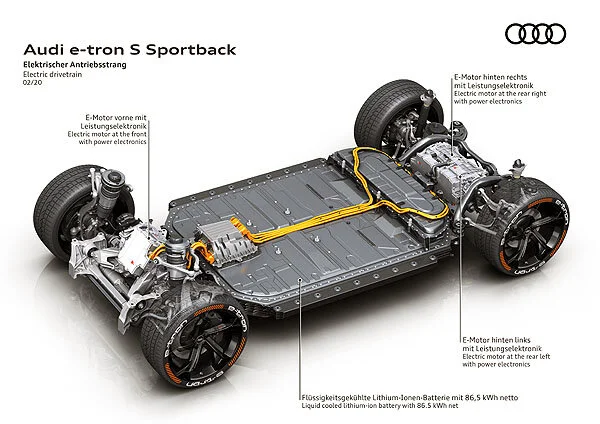
Ingolstadt, March 04, 2020 – Audi is systematically moving forward with its e-offensive: The Audi e-tron and the Audi e-tron Sportback are becoming more agile, sharper and more dynamic as S models. The three electric motors, two of which are located on the rear axle, together provide 370 kW of boost power and 973 Nm (717.6 lb-ft) of torque. This allows the two purely electrically driven models to accelerate to 62mph in 4.5 seconds. The intelligent drive control raises vehicle safety, and dynamic handling in particular, to a new level: In addition to the electric all-wheel drive, there is the electric torque vectoring with active and fully variable torque distribution on the rear axle.

Dynamism 2.0: the driving experience

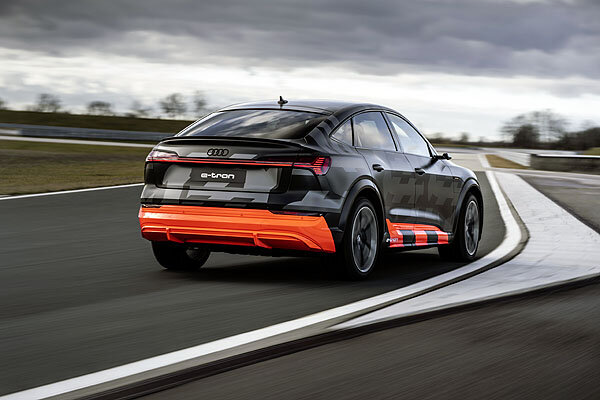
The driving experience of the two prototypes for the Audi e-tron S-models cannot fail to impress with its level of dynamism, agility and traction increased once more. In the S gear, both cars go from a standstill to 62mph in 4.5 seconds – almost seamlessly and nearly no noise – propulsion does not end until 130mph, limited electronically. Thanks to a powerful cooling system, the drive gives the full boost power of 370 kW and 973 Nm (717.6 lb-ft) of torque in reproducible form for eight seconds in each case. The nominal values in the D gear without boost are 320 kW and 808 Nm (596.0 lb-ft).

In terms of handling, the electric S models cannot fail to impress with their outstanding agility and traction: They can accelerate from a corner as skilfully as a sports car, their drive character is much more focused on the rear wheels and much more dynamically in nature. If the ESC stabilization control is set to “Sport” and the Audi drive select dynamic handling system is set to maximum performance with “Dynamic” mode, the drive layout facilitates a high level of transverse dynamics and, on request, controlled drifts as well. The driving behavior is predictable at all times and is characterized by an ultra-high level of safety and reliability.

The drive layout: three electric motors in the future mass production

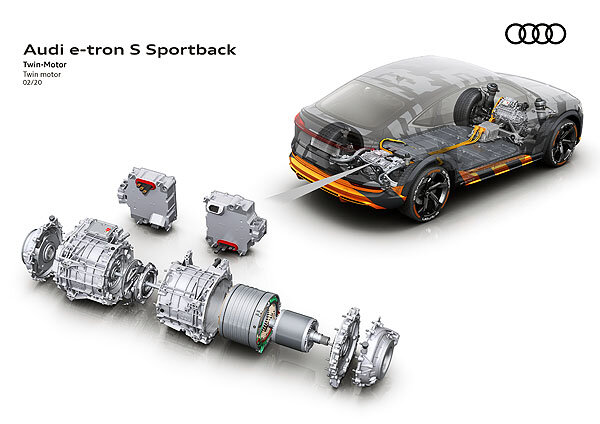
The new Audi e-tron S models will be the first electric cars worldwide with three motors in mass production. Their drive layout is based on the concept with two different asynchronous motors (ASM); the e-tron product line was designed in modular form in line with this from the start.

The larger electric motor, which powers the rear axle in the Audi e-tron 55 models, has now been installed on the front axle in an adapted design and configured for 124 kW of power, or 150 kW during boost. The smaller electric motor now works in a modified form in the rear, together with a counterpart that is identical in design; together, they offer 196 kW of power, or 264 kW in the boost.

200305001.jpg
200305004.jpg
200305006.jpg
200305009.jpg
200305001.jpg 200305004.jpg 200305006.jpg 200305009.jpg

Innovation from the quattro pioneer: twin motor with electrical torque vectoring

The drive has been programmed for efficiency in everyday life; in normal driving mode, only the rear electric motors work. The front-drive is unpowered but switches itself on – with the driver barely noticing – if the driver needs more power. It also switches on predictively if the grip declines. It does so when friction values are low and during rapid cornering. The electric all-wheel drive is complemented by a further technological innovation in the form of electrical torque vectoring, which brings the advantages of the conventional sport differential into the electric era. Each one of the rear electric motors sends the drive forces directly to the wheel via a transmission; there is no longer a mechanical differential. Forty years after the launch of quattro technology, Audi is thus raising the principle of the four powered wheels to a completely new level of technology. The result: more agile driving and self-steering characteristics, and thus a higher cornering speed.

One further advantage is the traction. If, during acceleration, a rear-wheel comes into contact with a road surface with a low friction value, i.e. if the road surface is covered in black ice or has a loose subsurface, the torque can be distributed precisely and quickly between the two motors. The full torque is gradually distributed to the wheel with powerful traction, while the wheel with low traction continues moving with almost no torque.

The two prototypes of the e-tron S models drive on 20-inch alloy wheels in the 5-V-spoke S design as standard. Different wheels up to 22 inches in size are available on request. To achieve an S-typical transverse dynamism, the tire widths in the sizes 20 inches, 21 inches, and 22 inches have all been enlarged to 285 mm. Black brake calipers with a red S rhombus, with six pistons at the front in each case, grip the large brake discs (front diameter: 400 mm). A further standard feature is the progressive steering – its ratio becomes more and more direct, the further the driver turns the steering wheel. The front and rear axles have been created as a five-link design. Harmonization of the elastokinematics and of the dampers has also been optimized for the S models. In order to even further reduce the rolling movements during cornering, the stabilizers on both axles have been enlarged.

Up to 150 kW: peak power, even during charging

When the driver is on the road, the electric S models can be charged with up to 150 kW of direct current power (HPC), such as in the UK and European Ionity network. This means that charging from 5 to 80% only takes around half an hour. An important factor for this is the elaborate thermal management system with a standard heat pump, which cools and heats the battery, the interior and the electric motors with four circuits. In addition, the Audi models will also be able to charge with up to 11 kW of alternating current (AC).

The Audi e-tron Charging Service guarantees convenient access to more than 140,000 public charging points in 24 European countries on request – with nothing more than a charging card. In the first year, Audi e-tron customers benefit from a year’s subscription to the transit tariff, which also offers access to high power charging columns. In addition, all new e-tron and e-tron Sportback customers ordering between 1 January and 31 December 2020 can receive £150 credit on their accounts, which translates into approximately 1,000 miles of free electricity.

In addition, all e-tron models currently benefit from a free wall box offer applicable to new customer orders placed from 1 January 2020. The Pod Point Universal socket 7kW Solo wall box (RRP of £879) enables overnight charging of the e-tron three times faster than using a domestic wall socket, and Audi UK will cover the cost of installation once the OLEV EVHS grant has been applied*.

Optical statement: widening the wheel arches

The powerful and dynamic design of the e-tron S models features the progressive Audi design vocabulary, which emphasizes the strong contours of the wheels. Details such as the octagonal Singleframe, which is, for the most part, sealed and painted bright grey, move the design into the electric era. At the lower edge of LED headlights, four struts create the e-tron-specific signature in the daytime running lights. The S models’ leading role can be seen straight away. The front and rear bumpers are heavily contoured, while the diffuser insert runs almost the full width of the vehicle. The bumper is flanked by bigger and more expressive air curtains, which improve airflow. They extend below the headlights, thereby creating a dynamic appearance even from a distance. On both sides, the wheel arches are a 23 mm wider. Silver-colored elements – from the lip of the front bumper, the Singleframe and the door inserts right up to the diffuser – emphasize the vehicle’s features. Audi will paint larger detachable parts in a contrasting color on request.

Both S models are available, on request, with the digital Matrix LED headlights, a worldwide first in mass production. Their light is dispersed into small pixels and can be controlled with high precision, and this facilitates many new functions such as lane and orientation light. In narrow areas, for example, it shows the car’s position in the lane and thus helps the driver to remain in the center.

Progressive: the interior and equipment

The interior of the future e-tron S models has been kept in dark colors. A large arc connects the displays of the virtual external mirrors with the bonnet above the Audi virtual cockpit. The instrument panel is driver-oriented, the middle tunnel’s console rests on open sidewalls. The electrically adjustable Valcona leather sport seats and the gear selector lever feature a rhombus S embossing. The door sills and steering wheel feature S badges. On request, Audi can offer a supersport seat in leather with a rhombus pattern in black, rotor grey or Aras red, as well as an air-conditioned customized contour seat with perforated leather.

200305060.jpg
200305061.jpg
200305052.jpg
200305045.jpg
200305060.jpg 200305061.jpg 200305052.jpg 200305045.jpg
In automotive, builder, motor show Tags audi, e-tron, s model
Comment
2020-British-GT-Media-Day_03-A.jpg

McLaren Extends Relationship with Intelligent Money British GT Championship for a 5th Season

Mario Sousa March 6, 2020
  • A record 12 entries running with McLaren Customer Racing, doubling the number on the grid from 2019

  • 720S GT3 and 570S GT4 to contest Silver and ProAm classes across both GT3 and GT4 championships

  • McLaren 720S returns as official Safety Car

McLaren Automotive will once again be represented on the highly-competitive Intelligent Money British GT grid, as it is confirmed that a total of 12 McLaren entries will contest the GT3 and GT4 championships during the 2020 season. This will be the strongest-ever showing for the British brand with eight examples of the 570S GT4 battling for GT4 honors, while an expanded grid of GT3 cars will see teams battling for both ProAm honors and, for the first time, the Silver class championship. The grid will also be led by McLaren for the fifth successive season as the 720S Safety Car returns to action.

The 720S Safety Car will manage and co-ordinate all on-track activities at each of the nine races, leading a record 34-car grid, with one-third made up of McLaren Customer Racing teams. This announcement further strengthens the relationship between McLaren Automotive and the SRO-run series which now enters a fifth year.

720S GT3 to challenge for ProAm and Silver titles

In the GT3 championship, Balfe Motorsport returns with the 720S GT3 for a second season and an unchanged ProAm line-up from 2019 of Shaun Balfe and McLaren Factory Driver Rob Bell. The pair are looking to pick up where they left off last season, having scored a race victory at the season finale at Donington Park to secure third in the championship.

Two new Customer Racing teams will also take to the British GT grid fielding the 720S GT3 for the first time in 2020. Championship regulars, and reigning GT3 Silver class champions, Optimum Motorsport confirmed a switch to McLaren over the winter and the Wakefield-based team will run with Australian driver pairing Nick Foster and Martin Berry, who are both new to the series. Completing the McLaren Customer Racing GT3 runners and riders is the newly-established 2 Seas Motorsport with a two-car entry both battling for Silver class honors. Angus Fender will share with McLaren GT4-race winner Dean MacDonald for one entry, while Championship debutant Isa Al-Khalifa has been confirmed in the second car. His driving partner is expected to be confirmed in the coming days.

Biggest ever McLaren presence on the GT4 grid

The GT4 class within the Intelligent Money British GT championship continues to grow in stature, and the grid gains strength each year with 2020 being no different. This season sees no less than eight examples of the 570S GT4 confirmed for the full season calendar battling for outright GT4 championship honors, with entries in the Silver and ProAm classes.

Leading the GT4 charge will be Tolman Motorsport as the team returns for the season with a two-car entry wearing striking new liveries. The 2019 GT4 championship runners-up will once again line up with the newly selected McLaren Automotive Driver Development Programme (DDP) drivers. Now entering its third season, the DDP continues to nurture young motorsport talent, and this year has expanded the reach of the program beyond the UK with international drivers representing Australia, North America, and Switzerland. It has now been confirmed that Michael Benyahia and Alain Valente will be paired up in the number #4 570S GT4, while Harry Hayek will race alongside Katie Milner in the number #5.

After confirming a move to join McLaren Customer Racing earlier this year which will see Optimum Motorsport run the 720S GT3 in both the GT World Challenge Europe powered by AWS and Intelligent Money British GT Championship, the team will also contest the domestic championship’s GT4 class with Pure McLaren GT Series graduates Brendan Iribe and Nick Moss partnering with professionals Ollie Millroy and James Pickford in two ProAm entries. The four drivers have previously raced together, clinching victory at the Gulf 12 Hours at the close of the 2019 season.

In parallel to a two-car entry in the GT4 European Series, HHC Motorsport returns to the British GT Championship running with a pair of 570S GT4s for a second season. After winning the opening round of 2019, the team will be looking to make another immediate impact on the championship with a double Silver class entry. Gus Bowers and Chris Wesemael both make a step up to GT4 competition and debut in the series. The driver line-up for the second car will be confirmed in due course. 

Completing the line-up of McLaren Customer Racing GT4 entries is Balfe Motorsport, bringing the total number of entries for the McLaren brand on the grid to a record 12. McLaren Professional Driver Michael O’Brien partners with Graham Johnson for a second season, while the first racing commitment since his appointed as Factory Driver will see Euan Hankey racing alongside double-Pure McLaren GT Series champion Mia Flewitt who makes a return to the British GT championship for her first full season.

“British GT’s official Safety Car partnership with McLaren Automotive enters its fifth season this year, extending one of the championship’s longest-running associations. We’re delighted to have the 720S - likely to be the world’s most capable Safety Car - leading our supercar pack to the start of every round once again, while the manufacturer’s GT3 and GT4 models make up one-third of this year’s full-season entry. We’re very proud that such an iconic British brand continues to have a high-profile presence in one of the UK’s biggest motorsport series.”Lauren Granville, Intelligent Money British GT Championship Manager 

Intelligent Money British GT Championship 2020 – confirmed entries for McLaren Customer Racing teams:

720S GT3 : GT3 championship – ProAm

Balfe Motorsport:          
#22 – Shaun Balfe (GBR), Rob Bell (GBR)

Optimum Motorsport:  
#68 – Martin Berry (AUS), Nick Foster (AUS)

720S GT3 : GT3 championship – Silver

2 Seas:               
#09 – Isa Al-Khalifa (BAH), TBC
#10 – Angus Fender (GBR), Dean MacDonald (GBR)

570S GT4 : GT4 championship – ProAm

Balfe Motorsport:          
#20 – Graham Johnson (GBR), Michael O’Brien (GBR)
#21 – Mia Flewitt (SWE), Euan Hankey (GBR)

Optimum Motorsport:  
#27 – Nick Moss (GBR), James Pickford (GBR)
#88 – Brendan Iribe (USA), Ollie Millroy (GBR)

570S GT4 : GT4 championship – Silver

Tolman Motorsport:      
#4 – Michael Benyahia (USA), Alain Valente (SUI)
#5 – Harry Hayek (AUS), Katie Milner (GBR)

HHC Motorsport:           
#57 – Gus Bowers (GBR), Chris Wesemael (GBR)
#58 – TBC, TBC 

In automotive, builder, motorsports, racing Tags McLaren, McLaren Automotive, McLaren Customer Racing, McLaren 720S GT3, McLaren 570S GT4, ProAm
Comment
Photo credit: Brian Williams, SpiedBilde

Photo credit: Brian Williams, SpiedBilde

Spy Shots—Refreshed Mustang Bullitt or Mach-1 Prototype?

Mario Sousa March 5, 2020
In automotive, builder Tags Spy Shots, Ford Mustang, Bullitt, Mach-1
Comment
200305012.jpg

Aston Martin V12 Speedster

Mario Sousa March 5, 2020

A Puristic Limited Edition for the most demanding drivers.

  • Limited-edition V12 Speedster unveiled at Aston Martin’s Gaydon headquarters

  • Open, uncompromising, visceral, two-seater layout with only 88 examples

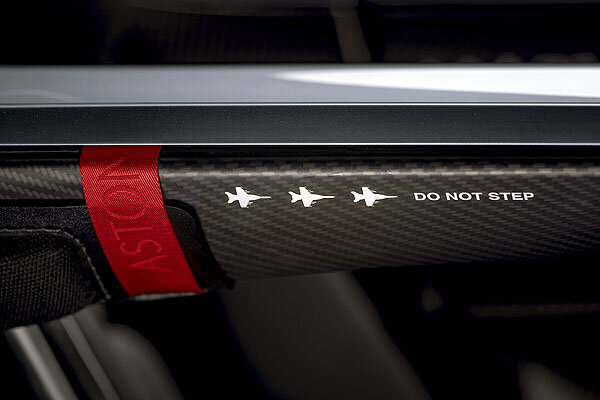
  • ‘Q by Aston Martin’ F/A-18 livery showcases conceptual specification pack

  • Pricing starts from £765,000. Now available to order. Deliveries Q1 2021

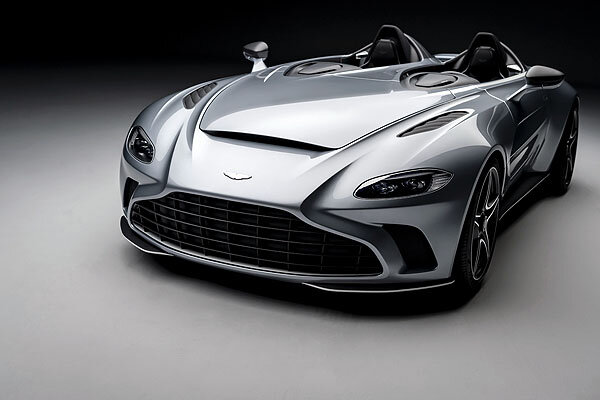
Wednesday 4 March, Gaydon: The Aston Martin V12 Speedster has made its global debut today, with just 88 examples of this puristic limited-edition model set to hit the road.

Created by luxury British marque’s bespoke customization service ‘Q by Aston Martin’, the Aston Martin V12 Speedster is a truly visceral driver’s car that draws inspiration from both the brand’s rich racing history and aeronautical design. Today’s example is showcased in a conceptual F/A-18 livery, also curated by the same artisans.

Aston Martin Lagonda President and Group CEO, Dr. Andy Palmer

Aston Martin Lagonda President and Group CEO, Dr. Andy Palmer

Aston Martin Lagonda President and Group CEO, Dr. Andy Palmer said: “It makes me enormously proud to reveal Aston Martin’s latest, most exciting special model today. The V12 Speedster is an incredible demonstration of the breadth of capability and determination from the ‘Q by Aston Martin’ team, who have worked tirelessly to create this stunning, two-seat sports car aimed at our most demanding and enthusiastic customers.”

Conceived a little over 12 months ago, the V12 Speedster has undergone an intensive development program, going from drawing board to production reality within that short period. Demonstrating the skills and meticulous planning of ‘Q by Aston Martin’ and Aston Martin Design, the V12 Speedster is a living show car, underlining the company’s commitment to delivering customers a stunning driver’s car, using the engineering ingenuity and advanced materials evident throughout the entire Aston Martin range.

Utilizing Aston Martin’s latest bonded aluminum architecture, the V12 Speedster utilizes elements from both the DBS Superleggera and Vantage model lines to create its own unique platform. With independent double-wishbone front, and multi-link rear suspension with coil springs and adaptive damping offering Sport, Sport+ and Track modes, the V12 Speedster also benefits from standard 21-inch forged center-lock alloy wheels. Carbon Ceramic Brakes of 410mm on the front axle and 360mm at the rear are also standard equipment.

Miles Nurnberger, Director of Design, Aston Martin Lagonda

Miles Nurnberger, Director of Design, Aston Martin Lagonda

Over the V12 Speedster’s unique chassis is a bespoke body constructed almost entirely from carbon fiber. Miles Nurnberger, Director of Design, Aston Martin Lagonda, said: “With the V12 Speedster we do go back a step and look into our past for inspiration. Since the DB11 launch, everything has been focused and very forward-looking. Here though, we find a different tempo. There’s the clear lineage from the 1959 Le Mans-winning DBR1 to our Centenary celebratory CC100 Speedster Concept in 2013. There is also a bit of 1953 DB3S in the mid-section, so it really is our latest incarnation of the Speedster concept. It’s also inspired by fighter jets as much as it is by our history, and it has been created to deliver an incredibly visceral experience, hence why it is a V12, rather than a V8. With the V12 Speedster, we are amplifying all the emotional strings that we can to the absolute maximum.”

200305009-A.jpg

Nurnberger adds: “No roof or screen, a big engine, low, with broad shoulders and exaggerated and emotional styling with twin humps and the spine separating the driver and passenger. The light, low, rear-end contrasts with the bold, enlarged grille, unique headlights, and bonnet nostrils at the front. The bonnet nostril we haven’t done in a very long time, but we’ve brought them back. It’s a neat trick visually to allow us to win some space for the V12. It creates this iconic looking vent.”

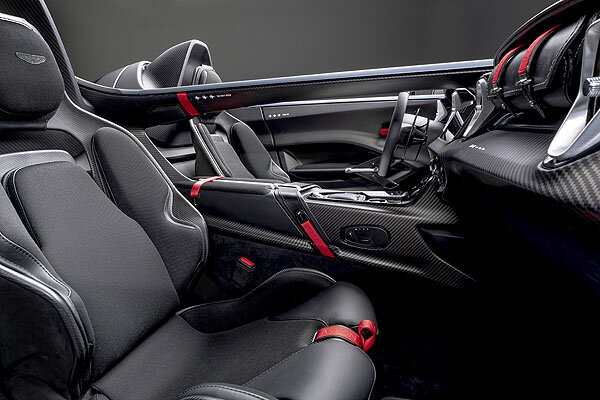
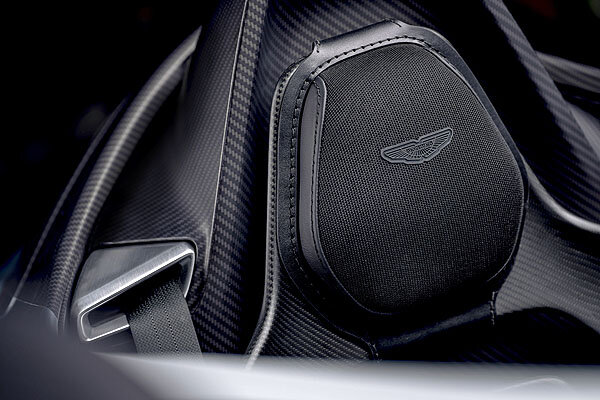
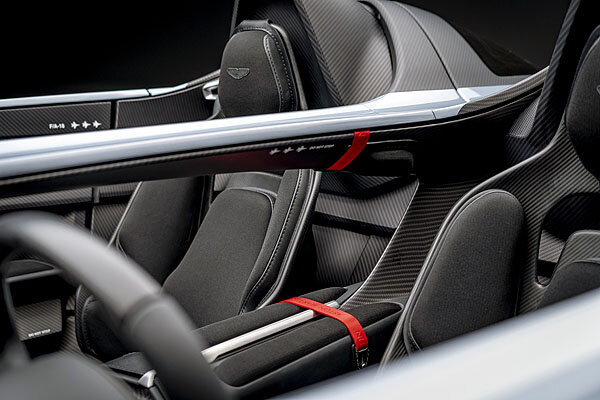
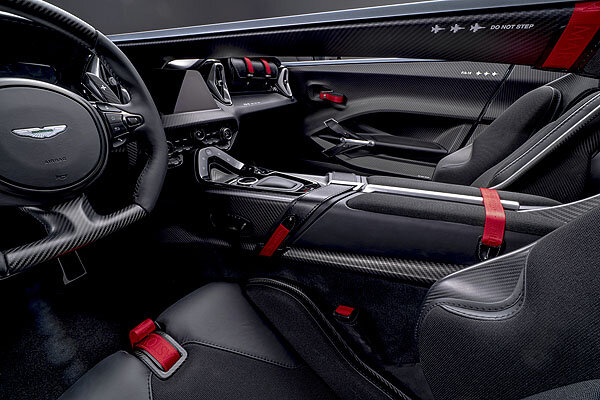
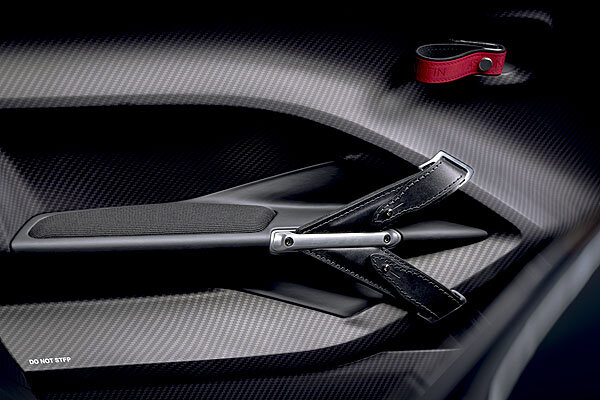
The interior specification pushes new boundaries, using a mix of traditional and modern materials. Structural satin carbon fiber contrasts with traditional hand-crafted Saddle Leather, chrome, aluminum and even 3D printed rubber. Visually and physically the interior reduces mass, for a leaner, efficient style, but one that retains all the emotion and craftsmanship Aston Martins are renowned for. In front of the passenger is a removable leather bag in place of a traditional glove box, while there’s additional storage space under the rear bumps for luggage.

200305013.jpg
200305002.jpg
200305003.jpg
200305010.jpg
200305014.jpg
200305015.jpg
200305016.jpg
200305017.jpg
200305013.jpg 200305002.jpg 200305003.jpg 200305010.jpg 200305014.jpg 200305015.jpg 200305016.jpg 200305017.jpg

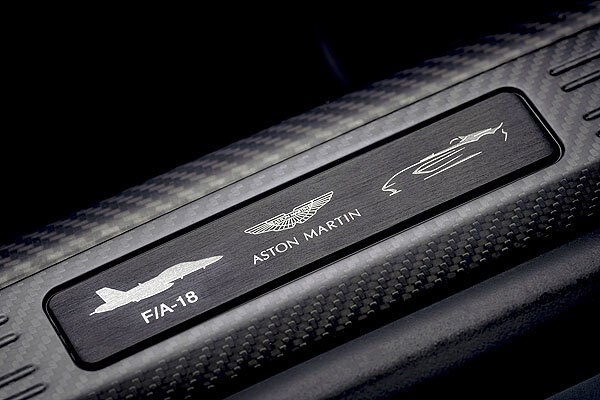
Unveiled here today at Aston Martin’s Gaydon HQ, the V12 Speedster has been shown in a conceptual specification that is inspired by the legendary F/A-18 and will be available for customers to order. Born from an exciting new collaboration with Boeing and created by the brand’s bespoke customization service ‘Q by Aston Martin’, this striking livery takes the legendary fighter jet for inspiration and is finished in Skyfall Silver, with contrasting satin black on the exhaust tips, vent grilles, and vanes. The dark theme is carried through to the interior, with satin dark chrome, machined aluminum, black leather, black technical textile, black carpets, and vivid red Aston Martin scripted door pulls, creating a purposeful look for this conceptual styling.

Powering the V12 Speedster is Aston Martin’s scintillating 5.2-liter, Twin-Turbo V12 engine, with a peak output of 700hp1 and 753Nm1 of torque. Front mid-mounted, the all-alloy, quad-cam 48-valve engine is mated to a ZF 8-Speed automatic transmission with a limited-slip differential driving the rear wheels. The V12 Speedster is able to accelerate to 62mph (100km/h) in 3.5 seconds on the way to limited top speed of 186mph (300km/h)1.

The iconic V12 engine promises scintillating performance, but further underlining the V12 Speedster’s abundant character and unparalleled commitment to a thrilling drive is an even more invigorating aural signature. To create this Aston Martin’s engineers have created a bespoke stainless-steel exhaust system exiting centrally into the diffuser surface at the rear of the car for an even more rousing, characterful sound from the drivetrain. With the V12 Speedster, every element of the drive is experiential, most obviously the removal of the windscreen adding to the visceral engagement, heightening the driving experience to new levels.

Matt Becker, Aston Martin Chief Engineer, said: “for raw, driving thrills the V12 Speedster is unparalleled, the fully open element of the car adding a new dimension to the experience. It engages on every level, delivering a precise, involving driving experience, with agility and poise backed by abundant power from Aston Martin’s twin-turbo 5.2-litre V12. Driving doesn’t get any purer than this.

Aston Martin Lagonda President and Group CEO, Dr. Andy Palmer said: “nothing demonstrates Aston Martin’s commitment to providing unique, special models to its customers more than the V12 Speedster. The 88 hand-built cars will be sought after by driving enthusiasts and collectors alike all around the world. I’m excited not just about what they offer drivers, but of what it represents. The V12 Speedster not just showcases our incredible engineering capability and ambition, but also celebrating Aston Martin’s rich heritage.”

Orders are now being taken for the V12 Speedster, with pricing starting at £765,000 including VAT and deliveries expected to begin in the first quarter of 2021.

1Estimate

In automotive, builder, motor show Tags Aston Martin, Aston Martin V12 Speedster, Limited-edition V12 Speedster
Comment
rawbfuller_87699299_101342908119540_7878226180296780690_n.jpg

Shop Spotlight: Z Car Garage

Mario Sousa March 5, 2020
View this post on Instagram

This post is for Alvin! #zcargarage #specmiata #ssm #zoomzoom #tagtoyo #teamtoyo #toyotires #gogaZ #turbolseries #e85 #love20bee #joelanderson #49 #butters #wesleeptheylive #archerst #carsandcoffee #professionalsonaclosedcourse ▶️🎦

A post shared by Rob Fuller (@rawbfuller) on Mar 4, 2020 at 8:48pm PST

In automotive, builder, motorsports, racing Tags Z Car Garage, Shop Spotlight, San Jose CA, Datsun Z Specialists
Comment
200303001.jpg

Hispano Suiza Carmen Boulogne

Mario Sousa March 4, 2020

A sports-focused, tailormade evolution of the Carmen that reflects the brand's racing heritage

  • The motorsport-inspired Carmen Boulogne pays homage to Hispano Suiza's competition heritage

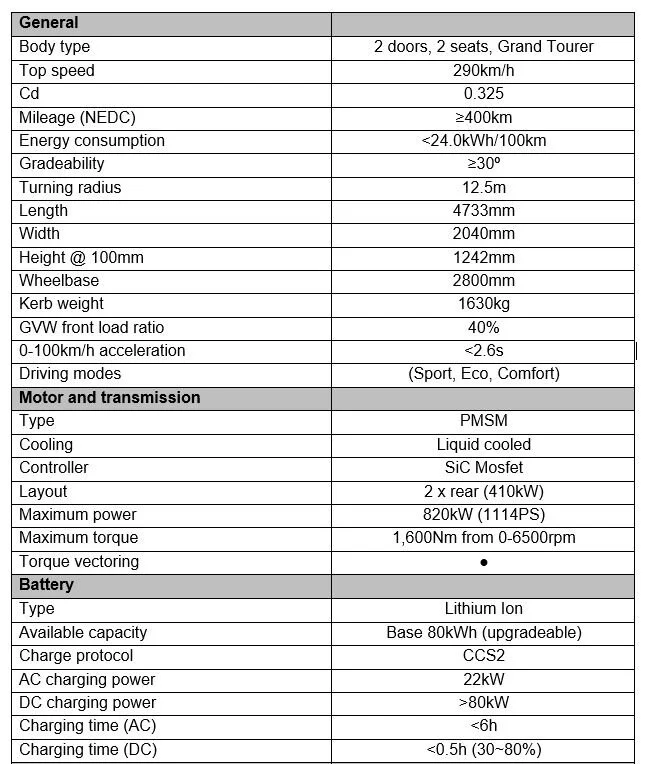
  • The Carmen Boulogne boasts 820kW (1,114PS), a 290km/h (180mph) top speed and a 0-100km/h time of under 2.6 seconds

  • Fully carbon fiber sub-chassis achieves a weight of just 1,630kg. Optimized suspension and carbon fiber enhancements save 60kg vs Carmen

  • The infinitely-customizable Carmen Boulogne embodies the sporting spirit of Hispano Suiza alongside a strong family legacy

Barcelona, 3 March 2019 – The motorsport-inspired Carmen Boulogne pays homage to Hispano Suiza's competition heritage. Building on its sibling’s substantial credentials, the Carmen Boulogne boasts 820kW (1,114PS) up by 70kW (95PS); more speed 290km/h (180mph) up by 40km/h (25mph) and a 0-100km/h time of under 2.6 seconds.

Utilizing Carmen's expertly engineered chassis and powertrain technology, Carmen Boulogne delivers a blend of exhilarating power, exceptional luxury, and elegant design.

Born of the brand's 'Unique Tailormade' department in Barcelona, the infinitely-customizable Carmen Boulogne embodies the sporting spirit of Hispano Suiza alongside a strong family legacy.

The new sportier variant of the Carmen is the next stage in the evolution of the resurgent Spanish luxury car brand. Designed, developed and manufactured in Barcelona, the fully-electric Carmen Boulogne shares its sibling’s classically-inspired design, but applies sportier styling and showcases the extent of customization available to the five customers who will own one of the hyper-exclusive models.

Combining its enhanced, fully-electric 820kW (1,114PS) powertrain with a bespoke super-stiff carbon fiber monocoque, stiffer double-wishbone front, and rear suspension, and torque vectoring, the Carmen Boulogne delivers exceptional dynamics, with a focus on thrilling performance. With such prodigious power, and a curb weight of 1,630kg, the new variant has world-class performance capabilities: 100km/h is reached in under 2.6 seconds, while the top speed is 290km/h.

The car’s exquisitely-precise carbon fiber bodywork is proudly displayed beneath a clear coat varnish, which emphasizes its aggressive sportiness while retaining Carmen’s timeless elegance. Inside, the Carmen Boulogne variant is distinguished from its sibling through the use of suede or black Alcantara across the bulkhead and door panels.

The car’s design, engineering, and production has been undertaken in Barcelona by a skilled team of highly-experienced experts from Hispano Suiza and QEV Technologies – a company that specializes in electric powertrain development and motorsport engineering.

The Hispano Suiza Carmen Boulogne will cost from €1.65m (plus taxes). The five special edition Boulogne variants join 14 Carmen or Carmen customized models to complete the total 19-unit production run, with the first customer taking delivery in 2022. Prospective customers can now register their interest to purchase one of the hyper-exclusive models.

A product of the brand’s ‘Unique Tailormade’ operation, the Boulogne features design enhancements that reference Hispano Suiza’s racing vehicles from the 1920s, while building on Carmen’s exhilarating performance and exceptional luxury.

The Boulogne moniker dates back to 1921 and the George Boillot Cup, in which Hispano Suiza competed with a performance-focused version of the company’s H6 Coupé. The endurance race saw competitors battle for victory for more than 3.5 hours, on the roads around the French town of Boulogne. 

Hispano Suiza achieved three consecutive race wins, with drivers André Dubonnet (1921), Paul Bablot (1922) and Léonce Garnier (1923) driving specially-modified versions of the Hispano Suiza H6.

Purposeful sports styling builds on Carmen’s contemporary reimagination of a classic shape Hispano Suiza

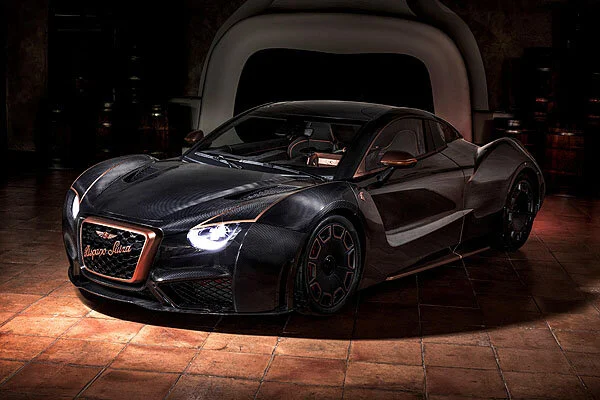
Carmen’s styling is deliberately provocative, intended to generate an emotive reaction and to be instantly recognizable. The Carmen Boulogne extends this theme, adding a layer of menacing mystique through its exposed carbon fiber – deeply polished beneath a lustrous clear coat.

Emphasizing its enhanced performance capabilities, the new model features copper-colored livery that highlights the car’s aerodynamic form. It makes use of the original model’s large air inlets that flank the grille, sitting above a ‘floating’ front splitter, which channels air under the car.

The Carmen Boulogne carries the same semi-circular combination headlamps and aggressive ‘frown’ as its sibling but is clearly differentiated by its dominating copper-colored grille.

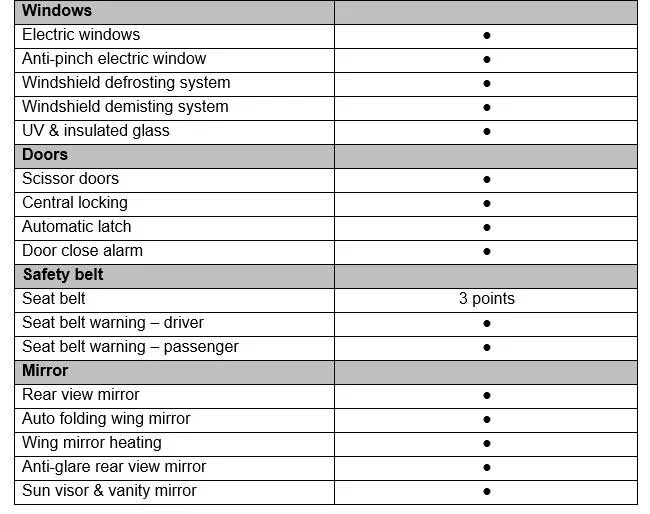
Visual theatre is a key element of the Hispano Suiza DNA. Before even entering the car, the driver and passenger are provided with a dramatic performance as the scissor doors rise and pivot in one smooth, elegant movement. With the doors closed, Carmen’s distinctive aerodynamic teardrop profile is revealed. Here, a key styling element that differentiates the Boulogne variant appears where the concave bodyside scoop ends, just as the dramatic rear haunch takes over – the rear wheel is exposed rather than being shrouded.

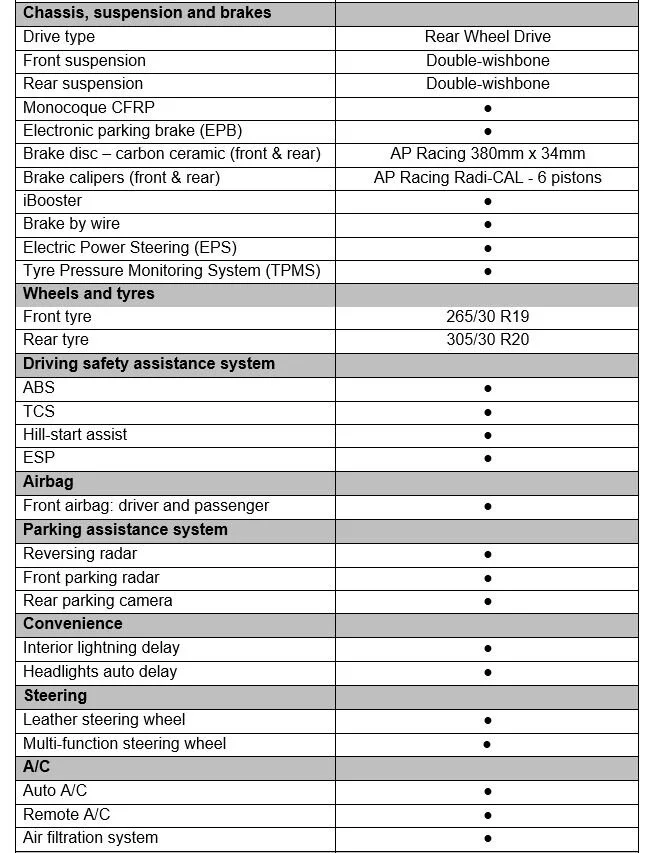
This unobscured view of the 20-inch rear wheels serves to emphasize the new model’s sports focus while also enhancing cooling of the carbon-ceramic brakes (discs: AP Racing 380mm x 34mm; calipers: AP Racing Radi-CAL - 6 pistons). Newly-styled wheels are proudly displayed with 10 curved trapezoidal shapes set around the outer rim and a series of concentric circles framing the central Hispano Suiza emblem. With front and rear wheels on show, the Carmen Boulogne is visually more balanced than its Grand Tourer sibling, and benefits from a more menacing stance – a characteristic emphasized by its black carbon fiber bodywork.

Viewed from the rear, the taught haunches that arch over the covered rear wheels also feature copper-colored detailing. They taper slightly, flanking a dramatic narrowing of the roofline and rear screen that ends in a distinctive, sharp, rear-facing point – the trailing tail of the teardrop.

The circular rear combination lamps feature the signature Hispano Suiza stork graphic within the rear-light cluster. When seen from an angle, the indicator pulses along the length of the rear-lamp cones creating an arresting visual spectacle.

The performance focus of the Carmen Boulogne capitalizes on the car’s low drag coefficient (Cd 0.325), lower than the Porsche 918 Spyder (0.34), Koenigsegg Agera R (0.37) and Ferrari F12 (0.33). In accelerating to its top speed of 290km/h, it makes full use of its streamlined form, combined with the front splitter, flat floor and rear diffuser that work in unison to reduce lift.

200303002.jpg

Exquisite and luxurious interior blends modern technologies with contemporary design cues

The passenger cabin of the Carmen Boulogne is a more contemporary take on Hispano Suiza’s blend of premium quality materials and classic design cues. The Carmen’s refined and luxurious wood trim is replaced by suede or black Alcantara, while chrome trim is changed for anodised metal in a striking Orange Tulipwood colour.

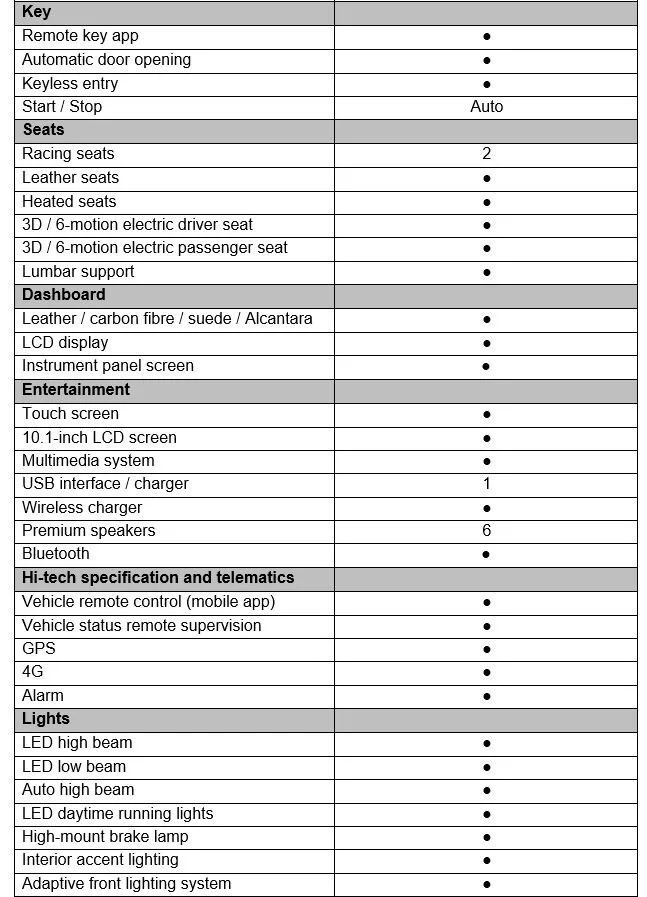
Awaiting the occupants inside the car is a combination of the finest leather and Alcantara that is used to trim the heated, 3D / 6 motion power-adjustable carbon fibre composite seats, as well as the door panels and roof lining. All upholstery is hand-trimmed and hand-sewn in-house at Hispano Suiza’s Barcelona assembly facility, helping ensure that the driver and passenger are cosseted within an authentically sumptuous environment.

Such is the focus on the ultimate ownership experience, each Carmen Boulogne is almost infinitely customisable via the brand’s ‘Unique Tailormade’ department. Buyers can pick the specific shade of leather, the set-up of the interior mood lighting, and can even specify a custom-perfumed interior, developed with the buyer to ensure the car is aligned perfectly with their preferences.

The artisan craftsmanship that is apparent throughout the interior retains a direct lineage to the brand’s history. For example, the dash reflects the characteristics of the Carmen Boulogne’s predecessors, with anodised Orange Tulipwood-coloured metalwork perforated by authentic toggle switchgear for reassuring mechanical tactility. The clockface at the centre of the dash features a Swiss mechanism with design and development by a Spanish watch maker. It echoes the position and status of the timepieces that featured in the brand’s earlier cars. Similarly, the triangular gear selector is a direct reference to the art deco steel triangle that featured on the dash of Hispano Suiza’s in the company’s historic models.

While the style is unashamedly retrospective, the technologies employed deliver the best experience possible for occupants. Ambient LED lighting strips are hidden along the door panels and in the footwells to ensure that the interior is a welcoming and inviting space.

The steering wheel spokes feature smartphone and multimedia controls, while a highly-intuitive user interface sits at the centre of the driver-focused infotainment console. A high-definition, 10.1-inch touchscreen display allows owners make infotainment selections and configure vehicle settings with ease. The screen is also where video output from the rear parking camera is presented. High-fidelity audio is delivered by six premium speakers and a subwoofer, providing a unique 360-degree audio experience.

A dedicated Hispano Suiza mobile app enables owners to remotely set cabin temperature, operate the lights, and set the alarm, as well as monitoring the battery charge status.

Advanced electric powertrain delivers motorsport-inspired performance

Achieving enhanced performance, to elevate the Carmen Boulogne to even greater heights, was the primary focus for the Hispano Suiza technical team. Inspired by the brand’s race-winning successes of the 1920s, the engineers set out to boost the Carmen’s exceptional power even further.

Building on the Carmen’s substantial credentials, the Carmen Boulogne boasts 820kW (1,114PS) up by 70kW (95PS) on its sibling. With a longer-ratio gearbox, a new silicon carbide transistor, and stiffer suspension, the performance variant has a higher top speed 290km/h (180mph) up by 40km/h (25mph), and boasts a 0-100km/h time of under 2.6 seconds.

The Carmen Boulogne is powered by two 410kW permanent-magnet synchronous motors (PMSM), one for each rear wheel. Each motor’s significant torque is controlled through sophisticated torque vectoring systems developed in-house. From 0-6,500rpm, the motors are capable of 1,600Nm maximum torque, enabling the car’s blistering acceleration and seemingly endless pulling power.

The high-energy battery pack is T-shaped, running as a central spine of the car and behind the seats. It also serves as a tuned mass damper (TMD), providing stability and reducing structural vibration.

The Lithium Ion polymer battery pack boasts an available capacity of 80kWh. High-efficiency mechanical and electric components give a total energy loss from the battery to the ground of less than 10%, maximising vehicle range, which is targeted to exceed 400km.

The battery pack – made up of 700 cells – was designed and produced entirely in-house, including a complete temperature control system to ensure the cells can operate optimally. The battery monitoring system ensures stable charge and discharge performance and delivers the required safety strategies.

The new model also features >80kW DC Fast Charging capability, requiring just 30 minutes to charge from 30-80% via a CCS2 Fast Charger. It also features CHAdeMO and GB/T charging options.

The battery and electric powertrain components are liquid-cooled via three front radiators: one under the hood at the front of the car for battery cooling, and one each side, inboard of the front wheel arches, for cooling powertrain components. The three front air intakes provide airflow to help cool the electric drivetrain system and battery. The location, size and diffuser-style shape of these intakes, together with split planes, distribute the air in the radiator’s core to achieve the optimal balance of drag and high air flow across the radiators. The outlets in the hood that expel air from the front radiator, and those in the front wheel arches that expel air from the side radiators, have been carefully designed and located to minimise drag.

Battery heat expulsion is controlled by the front central radiator and condenser. The battery thermal management system uses a passive heat exchanger (radiator) and an active cooling system, which shares its refrigeration cycle with the passenger cabin’s air conditioning. Also, a PTC (Positive Temperature Coefficient) heater warms the battery in cold conditions.

The car’s Electronic Control Unit (ECU) software manages all vehicle power and control strategies, continuously interrogating myriad data streams and instruction actuators to control vehicle behaviour. These strategies are all developed and tested in-house by Hispano Suiza software engineers. A complex network feeds a huge amount of data to the ECU at a rate of up to 1,000 samples per second.

Data is also fed via the cloud to the Hispano Suiza back office infrastructure to ensure that vehicle status and condition is monitored by Hispano Suiza in real time to ensure ultimate reliability. This 4G functionality also enables eCall emergency services as required.

Hispano Suiza’s production partner – QEV Technologies – has extensive experience in developing electric vehicle powertrain technology, specifically for teams participating in FIA Formula E and FIA Electric Production Car Series (EPCS). As such, QEV Technologies brings unprecedented levels of engineering know-how to the Carmen Boulogne’s electric powertrain, contributing to its exceptional performance, efficiency, reliability and safety.

Bespoke carbon fibre monocoque chassis

The Hispano Suiza Carmen is one of the most carbon fibre intense cars in the world. Carbon fibre composites are employed extensively throughout the vehicle, and account for the vast proportion of vehicle structures.

Even in this, the most elementary structure of the Carmen, Hispano Suiza has created a unique work of art: the hand-laid carbon fibre deployed for the monocoque chassis is specifically oriented in a mirrored opposing weave pattern. This results in a forward-facing directional arrow shape down the centre-line of the car from back to front. Uniquely, in the Carmen Boulogne, this detailed and beautiful carbon fibre craftmanship is proudly displayed beneath the car’s clearcoat varnish.

Carbon fibre composite is also used for the crash protection structures that absorb and dissipate impact energy to protect the monocoque at the front and rear. Unusually, the rear subframe is also constructed in carbon fibre and is bolted to the primary chassis structure.

The monocoque chassis weighs only 195kg and exhibits exceptionally high rigidity to provide a torsional stiffness rating of 50,000Nm/deg. This not only contributes to a stronger and safer passenger cell, but also benefits the car’s dynamic performance. The Carmen’s stiffness-to-mass ratio (256Nm/deg per kg) out-performs any other hypercar: for comparison, the Lamborghini Aventador’s stiffness-to-mass ratio is 237Nm/deg per kg.

Through extensive development of the Carmen during the past year, the Boulogne boasts a weight of just 1,630kg, a saving of 60kg versus its sibling. The enhancements have been achieved through a newly optimised suspension (-25kg); a new sub-chassis (-15kg); chassis lay-up optimisation (-15kg); new CNC parts and carbon fibre roof (-6kg). The 11 carbon fibre body panels are also incredibly lightweight, tipping the scales at just 64.5kg – including the front splitter and rear diffuser.

Even the seat structures and interior upholstery-support panels are carbon fibre composites. Furthermore, composites are also deployed as electric insulation materials and as part of the car’s NVH management, as a sound and vibration dampening substance.

Inspired by the brand’s performance-focused past, the Carmen Boulogne’s blistering straight-line speed is married with driver-focused dynamic capabilities thanks to the highly experienced team. It has developed and integrated a range of advanced chassis systems to achieve the dynamic goals for the car. Not only will the Carmen Boulogne exhibit exceptional handling, but the characteristics and behaviour of the car should be predictable and easy to drive. Carmen Boulogne is a racing-inspired car for the road that embraces and harnesses the most advanced motorsport-inspired technologies and techniques to engage and bring joy to the driver.

Double wishbone suspension is fitted at the front and rear, which is paired with adaptive damping control and variable roll stiffness distribution technologies to deliver precise and responsive handling, while retaining a refined and comfortable ride. Notably, the suspension set-up of the Carmen Boulogne has been stiffened slightly to account for the car’s sportier nature.

True torque vectoring manages the distribution of the two motors’ torque to each rear wheel, according to driver inputs and levels of grip available. This provides a series of benefits, particularly in dynamic response during the most spirited driving, greater high-speed stability, and improved safety on low-grip surfaces.

Additional active safety technologies include anti-lock braking (ABS), traction control (TCS) and electronic stability control (ESP) systems. Meanwhile, the Carmen’s brakes are powerful carbon-ceramic composite units from AP Racing. The 380x34mm front and rear ceramic discs work with the six-piston Radi-CAL calipers to ensure the Carmen Boulogne can shed speed rapidly and consistently.

A proud Spanish spirit and strong family legacy

Hispano Suiza was responsible for the design and manufacture of more than 12,000 luxury performance cars and 50,000 aeroplane engines between 1904 and 1946. Even before he joined Hispano Suiza as its Technical Director, Marc Birkigt experimented with cutting edge technologies in the new era of the automobile, leading a team that built one of Spain’s first electric car prototypes in 1899.

Some of the innovations that he later went on to develop helped Hispano Suiza cars to be considered among the world’s finest and most advanced. Indeed, many media and high-profile automotive enthusiasts considered the brand’s cars among the best in the world. Even three decades after Hispano Suiza stopped making cars, other luxury brands were still using automotive technology licenced from Hispano Suiza.

Hispano Suiza is a fourth-generation family business. Its president, Miguel Suqué Mateu is the great-grandson of the brand’s founder, Damián Mateu. It is believed that Hispano Suiza is unique in nurturing an unbroken family lineage in the reintroduction of an automotive brand born in the first era of the automobile. The company is intensely proud of its Spanish roots – its headquarters, technical centre, and manufacturing facility are all based in Barcelona, and more than three-quarters of the Carmen’s components are sourced in Spain.

Through the President, the Mateu family retains an intimate relationship with the reborn Hispano Suiza operation, influencing the brand’s direction, management, and planning, plus the design and specification of the new Carmen Boulogne.

Grup Peralada

Grup Peralada was established in 1904 and has been owned and managed by the Suqué Mateu family since it was founded. The group of businesses has continued to grow and represents the pinnacle of luxury in gastronomy and entertainment. Its highlights include a three-time Michelin star restaurant – Castell Peralada – in north-east Spain, where it also owns 12 award-winning wineries, an 18-hole golf course and hotel and offers the world’s first wine-spa health treatments. It also hosts the annual Peralada International Music Festival, celebrating the arts, opera and ballet. It operates 21 restaurants, eight casinos and six five-star hotels across Europe and Latin America.

Technical specification: Hispano Suiza Carmen Boulogne

Table-1.JPG
Table-2.JPG
Table-3.JPG
Table-4.JPG

Social media

Facebook:       HispanoSuizaCars

Twitter:            HispanoSuizaCar

Instagram:       HispanoSuizaCarsOfficial

YouTube:        Hispano Suiza


In automotive, builder Tags Hispano Suiza, Carmen Boulogne
Comment
200304012.jpg

Fiat Debuts All-new 500 in Milan

Mario Sousa March 4, 2020

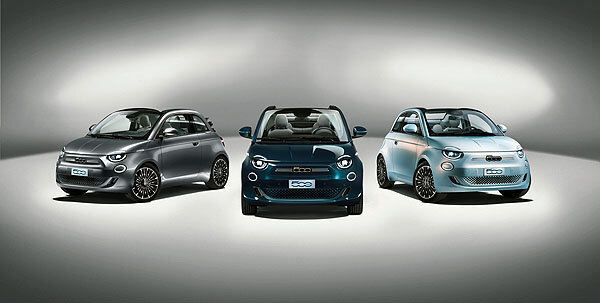
March 4, 2020 , Auburn Hills, Mich. - Today in Milan, Italy, FCA presented the all-new Fiat 500, featuring a 42-kWh lithium-ion battery and an 85-kW fast charger. With an output of 87 kW, the new 500 delivers acceleration from 0-62 mph in 9.0 seconds and 0-31 mph in only 3.1 seconds. The new 500 offers level 2 autonomous driving that includes intelligent Adaptive Cruise Control (iACC) and Lane Centering. Measuring 2.4 inches wider and 2.4 inches longer, with a wheelbase extended by 0.8 inch, the new 500 is the first Fiat car equipped with the new Uconnect 5 infotainment system, offering a 10.25-inch high-definition touchscreen. The new Fiat 500 has not been confirmed for the U.S. FCA is evaluating its potential for the North American market.

200304001.jpg
200304004.jpg
200304005.jpg
200304006.jpg
200304007.jpg
200304011.jpg
200304001.jpg 200304004.jpg 200304005.jpg 200304006.jpg 200304007.jpg 200304011.jpg
In automotive, builder Tags Fiat, Fiat Debuts All-new 500 in Milan
Comment
unnamed.jpg

Freevalve technology in a Koenigsegg

Mario Sousa March 3, 2020

Relieving the world from fossil fuels – faster

Ängelholm, Sweden – Freevalve AB, announced that its revolutionary technology is at the core of the brand new Koenigsegg Gemera’s Tiny Friendly Giant (TFG) engine. The Gemera will go into production in early 2022.

Freevalve’s technology enables the combustion engine to be the most sustainable propulsion choice when running on CO2-neutral fuels. Its independent and flexible control of the engine’s intake and exhaust flows provides a unique possibility to operate the engine on 0 – 100 % renewable fossil-free fuels. Not only does this offer a low CO2-footprint, but it also substantially higher energy efficiency and lower emissions. Additionally, Freevalve technology enables many other inventions, such as a unique twin-turbo concept and unlimited cylinder deactivation. What this adds up to is an astonishing 300 bhp per liter power density paired with unmatched flexibility.

Christian von Koenigsegg

Christian von Koenigsegg


“Freevalve is an enabler to move to CO2 neutral transportation - faster. I am proud to be part of the development team and lead this exciting company. To be able to say that we have Freevalve in the Koenigsegg Gemera, is truly a milestone for both Freevalve and Koenigsegg”, said Christian von Koenigsegg, CEO of Freevalve and Koenigsegg.


Freevalve also announced that it has partnered with SparkCognition, the world’s leading industrial Artificial Intelligence (AI) company out of Austin, Texas to further transform the already advanced combustion engine into a truly smart machine that aims to take the technology and sustainability even further.
Freevalve technology can be implemented in various automotive engine variations, including passenger cars, trucks and buses as well as marine and aerospace applications.

200303001.jpg
200303002.jpg
200303003.jpg
200303004.jpg
200303001.jpg 200303002.jpg 200303003.jpg 200303004.jpg


About Freevalve AB
Freevalve AB is a Swedish technology company that develops state-of-the-art, next-generation components and solutions for internal combustion engines. Freevalve began the development of its technology in 2000 and its latest actuator technology represents over a decade of testing and development, both in the laboratory and on test vehicles driven in real-world conditions.


For more information visit their website www.freevalve.com

In automotive, motor show, builder Tags Christian von Koenigsegg, Freevalve, Koenigsegg, CO2 neutral
Comment
P90383515-highRes.jpg

The BMW iNEXT in the hottest phase of its series development

Mario Sousa March 3, 2020

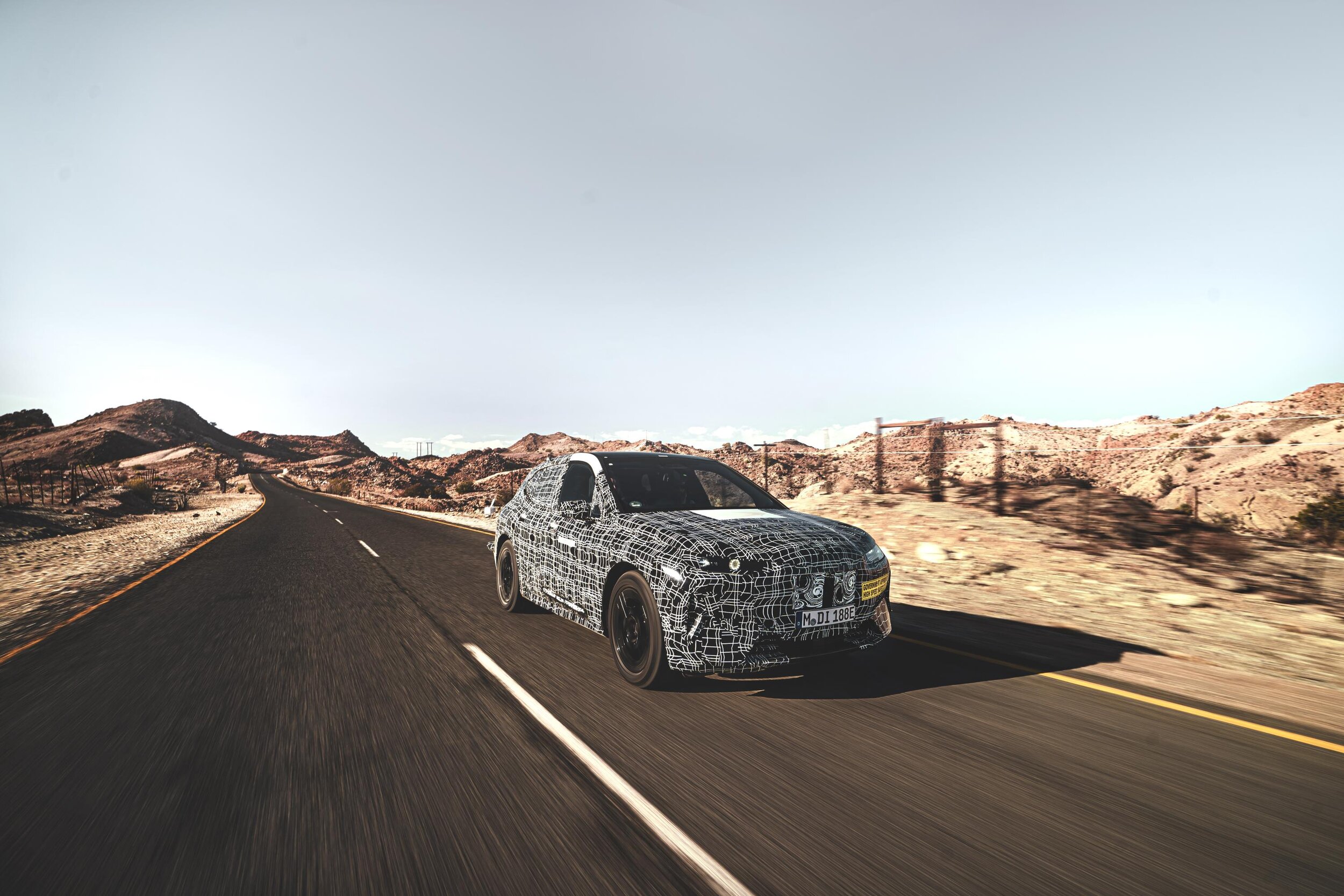
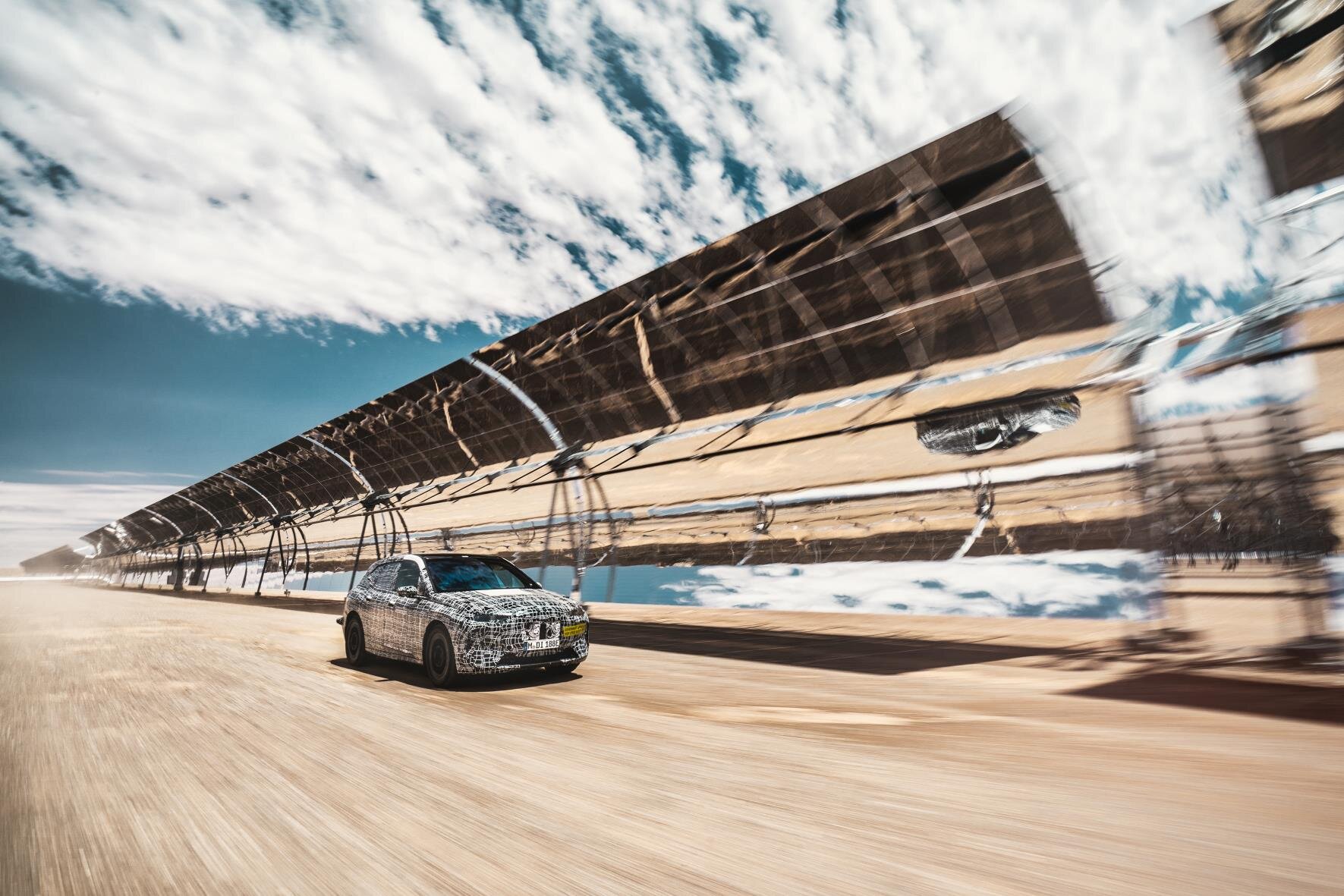
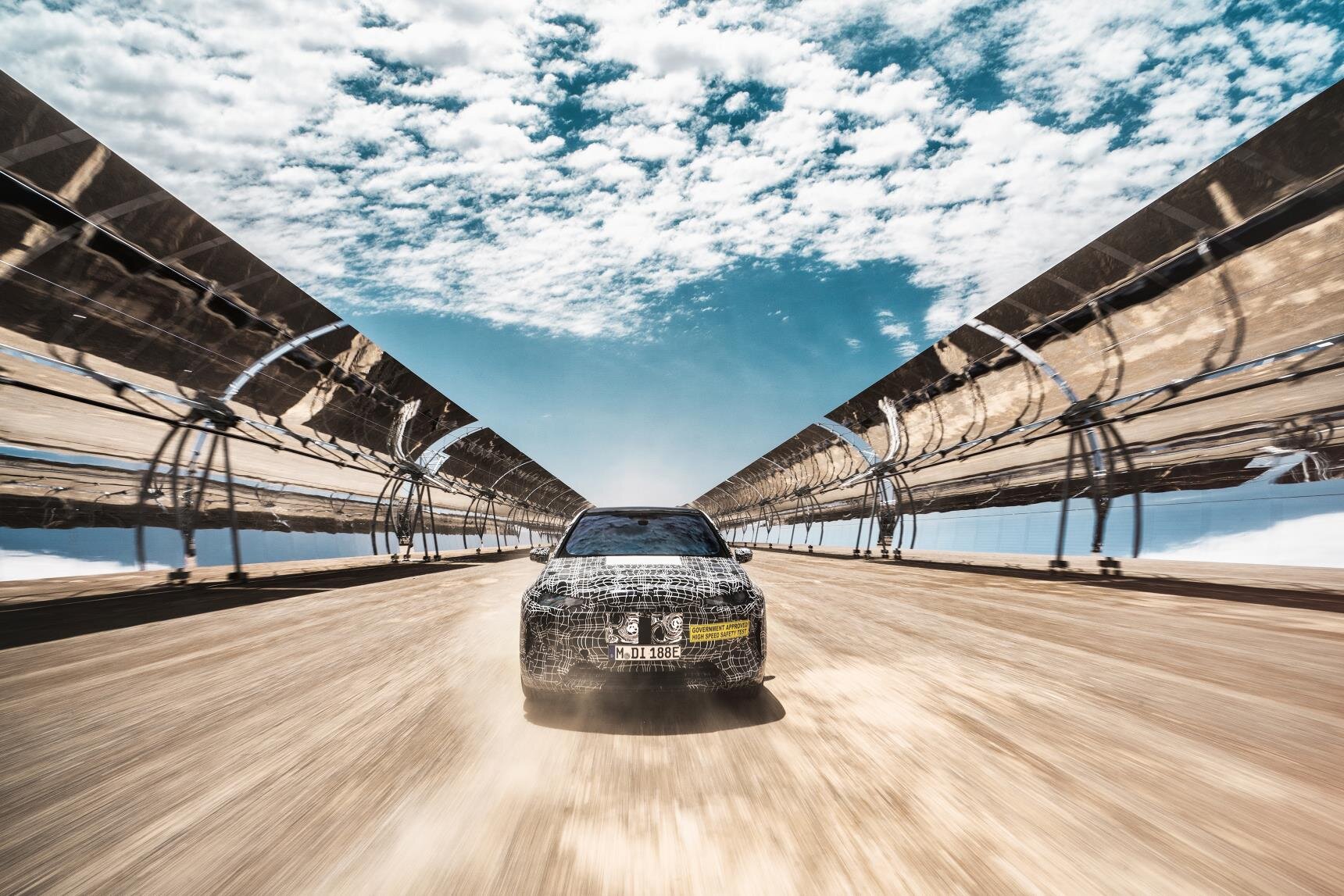
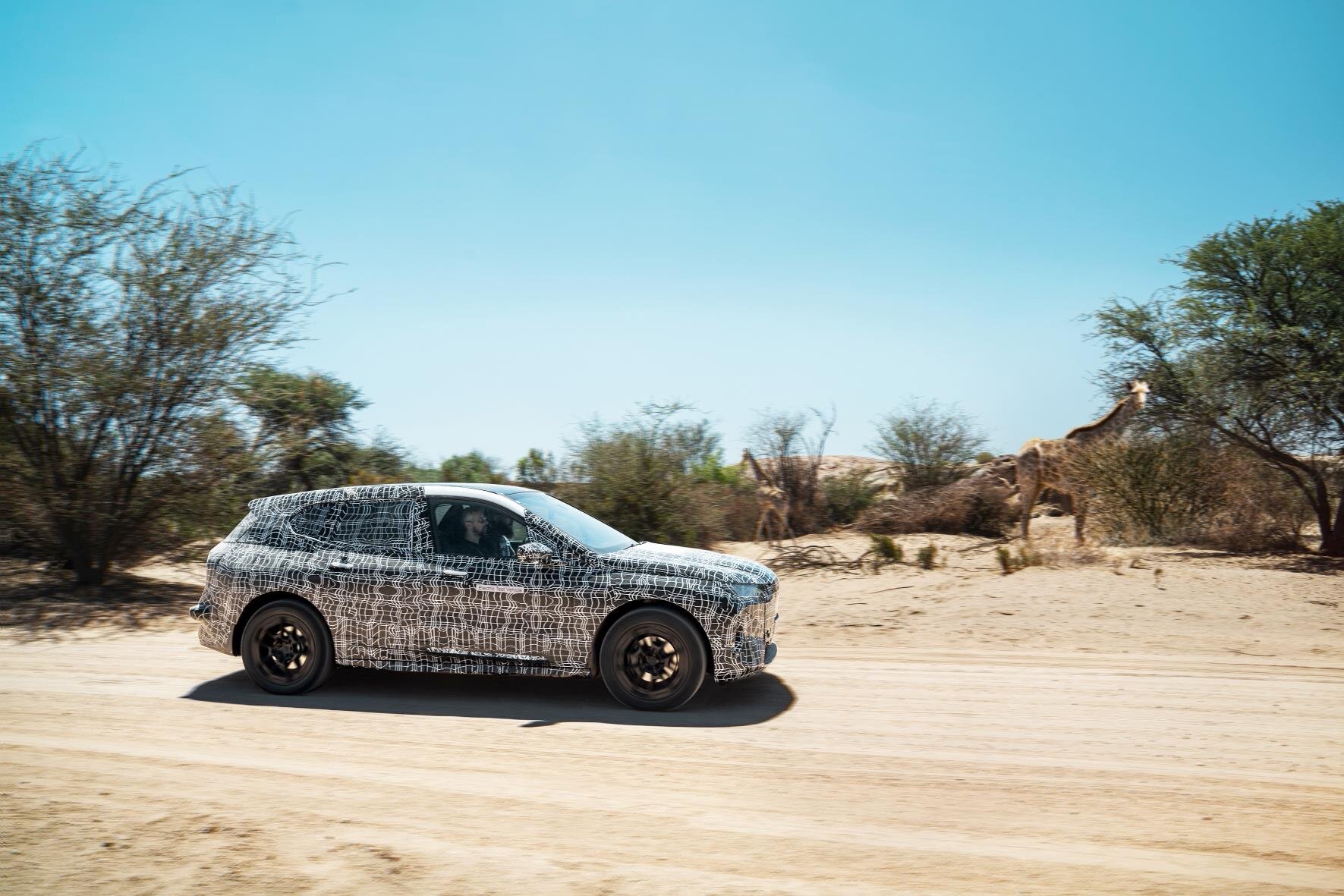
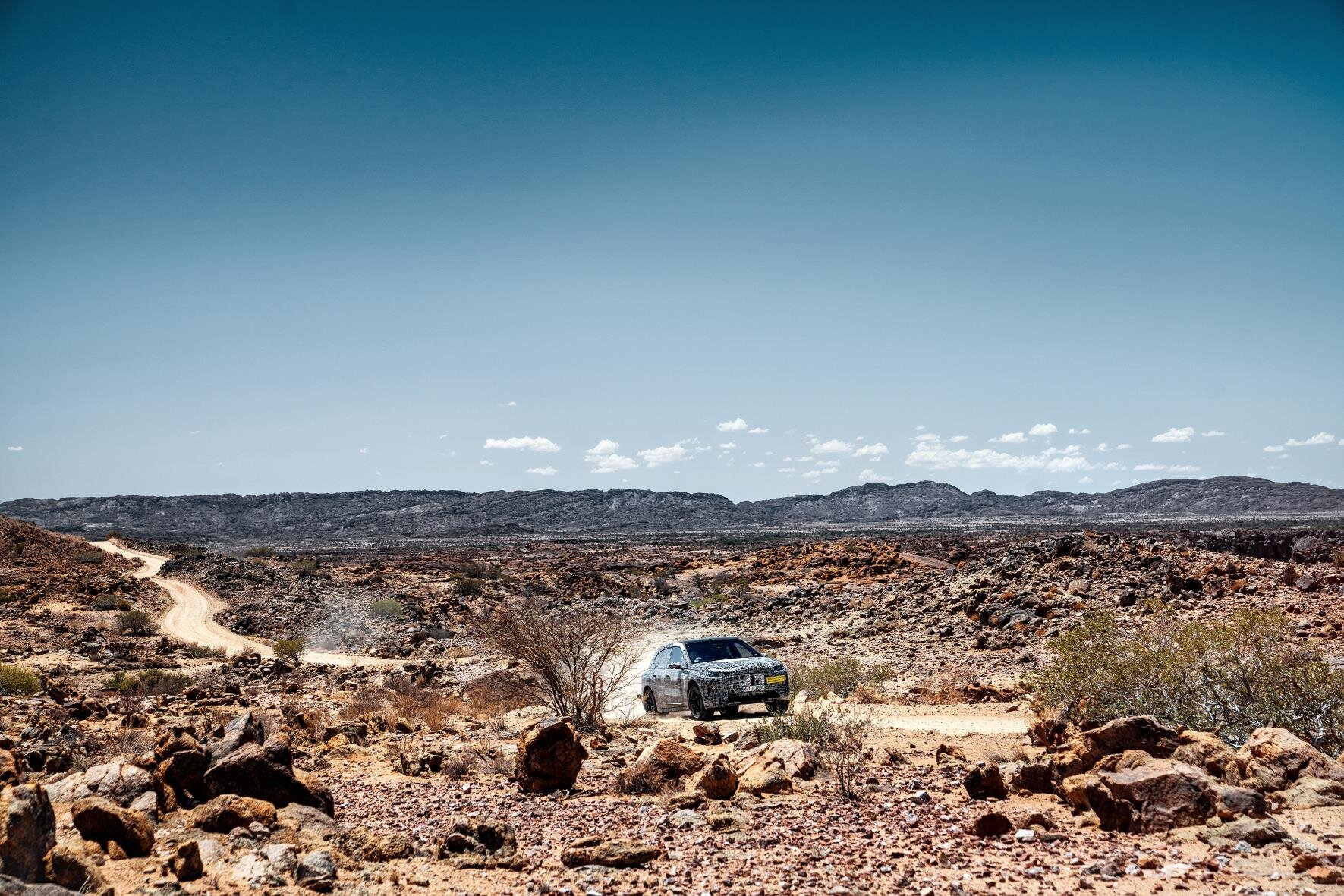
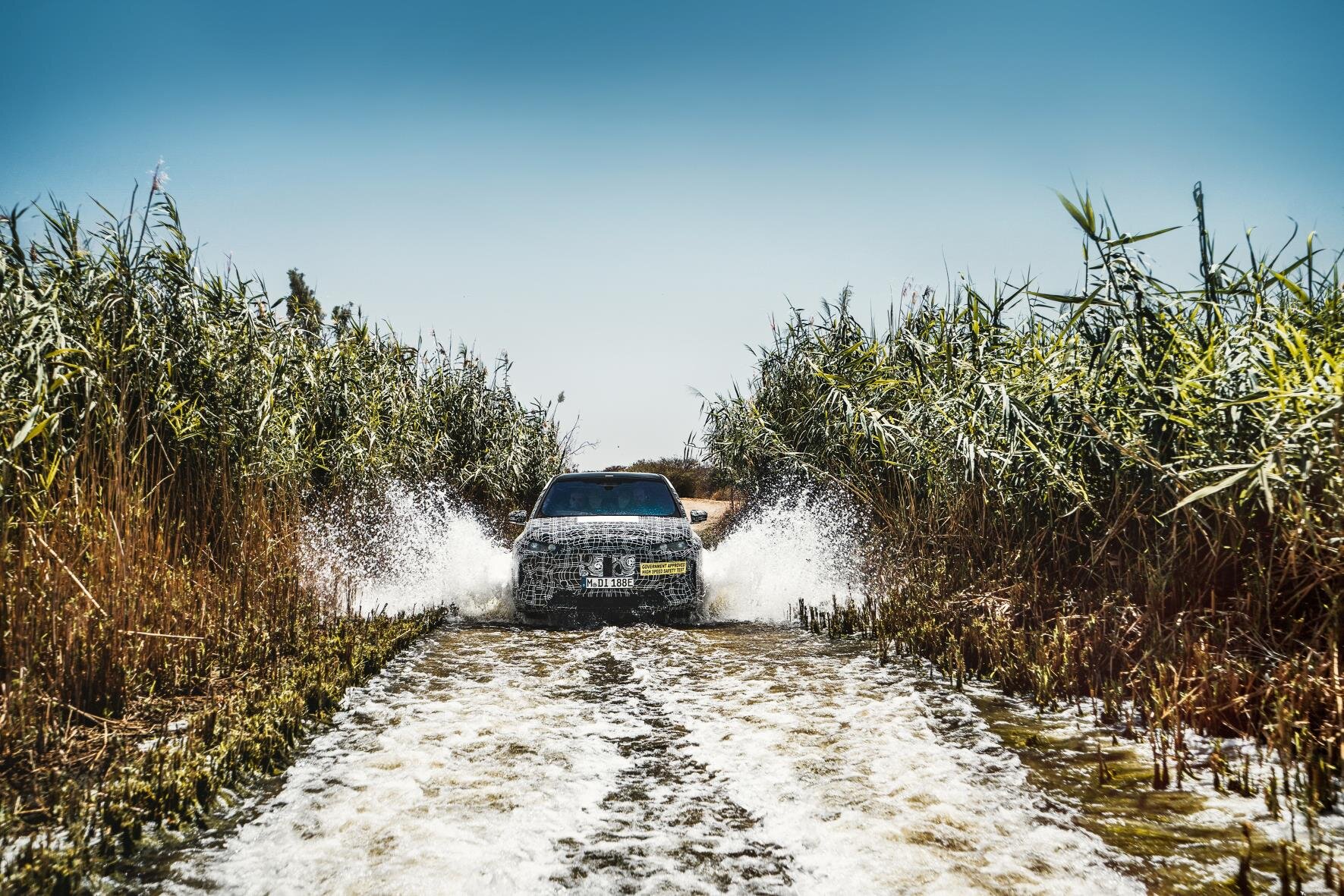
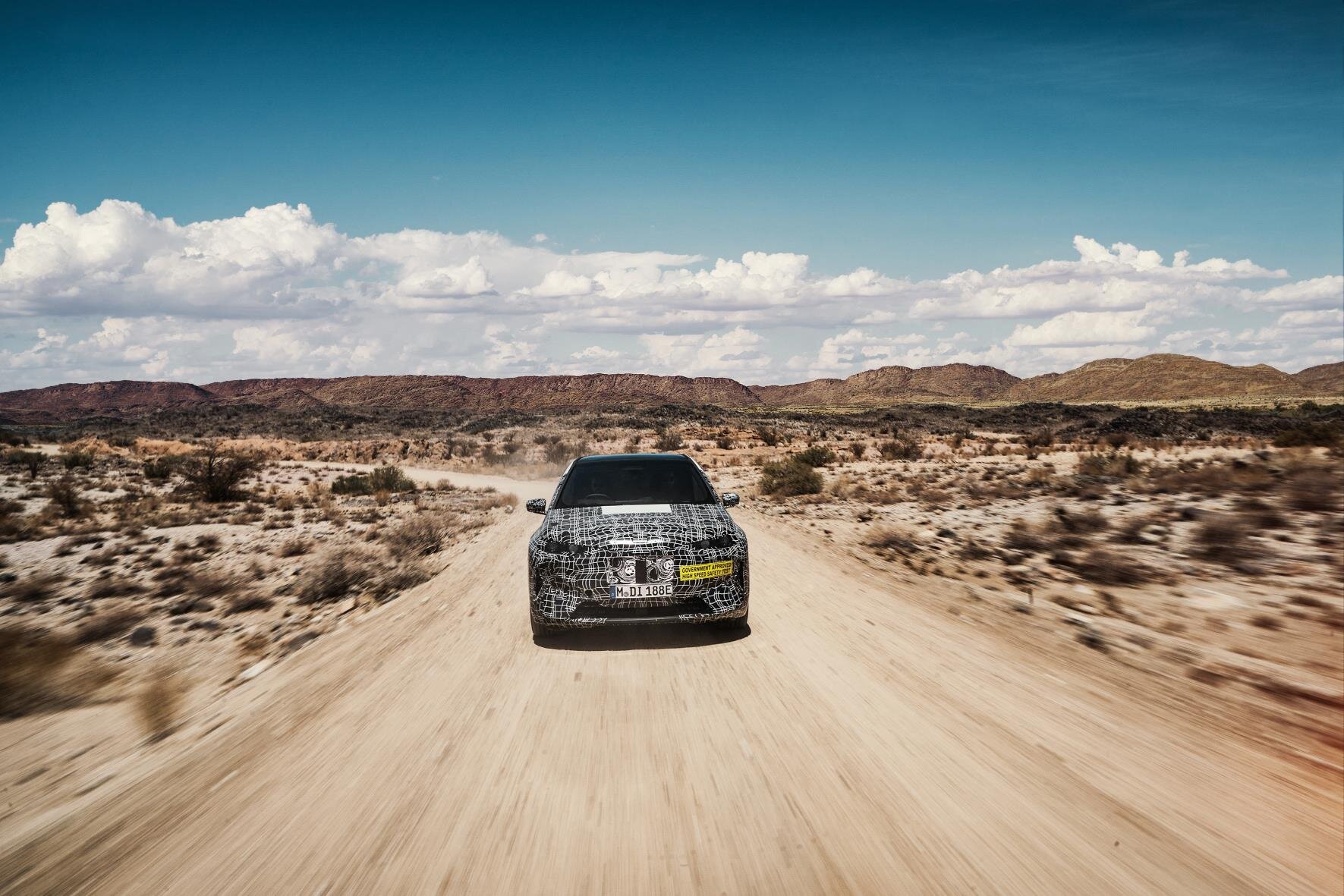
During test drives across the desert regions of South Africa, the BMW Group’s new technology flagship masters the manifold challenges associated with extreme heat, solar radiation and dust formation on dirt tracks.

Munich. On its way to series maturity, the BMW iNEXT is completing a further chapter of its overall vehicle testing under particularly demanding conditions. Intensive test runs in the freezing cold at the polar circle are now being followed by a contrasting program in the Kalahari in Southern Africa, where in addition to extreme heat and solar radiation, permanent dust formation and off-road terrain with its sand, pebble and gravel tracks pose exceptional challenges for the BMW Group’s technology flagship. In this literally hot phase of the series development process, not only do the drive and suspension components of the BMW iNEXT, a car designed for all-electric mobility, provide proof of their functional safety, durability, and reliability, but also the car’s bodywork, interior, driver assistance systems, and digitalization technology.

The so-called hot climate tests are an integral part of both extensive and varied development and test program within the framework of the series maturity process, which entails BMW iNEXT prototypes being subjected virtually in time-lapse to the stress of an entire vehicle service life. Like every new BMW model, the vehicle’s way to serial maturity leads to the BMW Group proving ground at Miramas in Southern France, the Nürburgring Nordschleife and other racetracks and to the Winter Center in Arjeplog, Sweden, as well as to desert regions with an extremely high level of heat and dryness.

Ice track, racetrack, desert passage: A variety of tests ensures long-term driving pleasure.

With the high-speed operation, in stop & go traffic, extreme temperatures below and above zero, testing on ice and snow as well as desert sand and gravel, the pre-series vehicles master in a concentrated form all of the challenges an automobile may face in everyday traffic over a period of many years. In the process, experienced designers and efficient onboard measuring technology record the vehicle’s reactions to various weather and road surface conditions as well as other influences. This ensures that the characteristic BMW driving pleasure experienced in future production models is not impaired in any way by exceptional circumstances. Production of the series version of the BMW iNEXT will commence at the BMW Dingolfing plant in 2021. Designed as a modern Sports Activity Vehicle, the new model combines the latest innovations defined by the BMW Group in its corporate NUMBER ONE > NEXT strategy for the future fields D-ACES (Design, Autonomous, Connected, Electrified and Services). Featuring fifth-generation BMW eDrive technology, the BMW iNEXT sets new benchmarks in sportiness, efficiency, and range in a battery-powered automobile. The car’s suspension control and driver assistance systems pave the way for a further step towards autonomous driving. And current innovations in the field of operation and digitalization also underscore the future-oriented character of the BMW iNEXT.

The BMW iNEXT masters extreme stress from heat, sunlight, and dust.

The test drives through the desert and Savanna regions in the North West of South Africa offer development engineers the ideal prerequisites for testing and harmonizing all drive and suspension components under extreme conditions. Surfaces alternating between sand dunes, gravel tracks, and off-road passages pose an exceptional challenge even to the intelligent four-wheel drive system of the BMW iNEXT. In temperatures that would drain any mobile phone battery in no time at all, the integrated cooling concept for the high-voltage battery, the electric motor and the vehicle electronics of the BMW iNEXT stands the test. Moreover, the interior air conditioning, which operates by means of thermal pump technology, its control system and all further components of the vehicle electronics are subjected to the extreme conditions of the desert climate in order to prove their series maturity.

During extensive heat tests, the vehicle is repeatedly exposed to the heat of the sun for hours and later cooled down. In this way, the developers test not only the operability of the electrical systems but also the temperature stability of the materials used in the interior, because the test engineers do not accept any creaking or crackling noises even in the event of sudden and intense temperature fluctuations. Furthermore, the Kalahari offers the ideal conditions for testing the dust-tightness of flaps, doors, and bonnets. During test drives over thousands of kilometers on unpaved roads, through dune landscapes and across sandy scrublands, the BMW iNEXT is stirring up a lot of dust but without letting any of it get inside.

P90383518-highRes.jpg
P90383517-highRes.jpg
P90383509-highRes.jpg
P90383510-highRes.jpg
P90383511-highRes.jpg
P90383512-highRes.jpg
P90383513-highRes.jpg
P90383514-highRes.jpg
P90383518-highRes.jpg P90383517-highRes.jpg P90383509-highRes.jpg P90383510-highRes.jpg P90383511-highRes.jpg P90383512-highRes.jpg P90383513-highRes.jpg P90383514-highRes.jpg
In automotive, builder, outbreak Tags BMW, automotive
Comment
Model is in a pre-production state.

Model is in a pre-production state.

Bacalar Spearheads Bentley Mulliner's Return to the Pinnacle of Coachbuilding

Mario Sousa March 3, 2020
  • Most exclusive and bespoke Bentley of the modern era revealed at Bentley’s headquarters in Crewe, England

  • Two-seat Bacalar marks return to bespoke coachbuilding for Bentley Mulliner – the oldest coachbuilding company in the world

  • Bentley Mulliner announces new three-portfolio future: Classic, Collections and Coachbuilt

  • ‘Barchetta’ design delivers the ultimate expression of open-top, driver-focused grand touring

  • Enhanced 6.0-litre W12 TSI engine produces 659 PS (650 bhp)

  • Just 12 distinctive cars to be designed, engineered and handcrafted to individual customers' tastes – all already allocated

  • Design DNA and sustainable materials inspired by the EXP 100 GT concept car, launched last summer to celebrate Bentley’s centenary

  • Sustainable craftsmanship and ethically-sourced materials includes rice husk ash paint and 5,000-year-old Riverwood

  • Bacalar to be produced in world’s first certified carbon neutral factory for luxury car production

  • Ultra-modern design includes extreme wrap-around cockpit and semi-enclosed rear compartment for bespoke Schedoni luggage

200303024.jpg
200303018.jpg
200303021.jpg
200303020.jpg
200303017.jpg
200303013.jpg
200303014.jpg
200303004.jpg
200303005.jpg
200303006.jpg
200303007.jpg
200303008.jpg
200303022.jpg
200303024.jpg 200303018.jpg 200303021.jpg 200303020.jpg 200303017.jpg 200303013.jpg 200303014.jpg 200303004.jpg 200303005.jpg 200303006.jpg 200303007.jpg 200303008.jpg 200303022.jpg

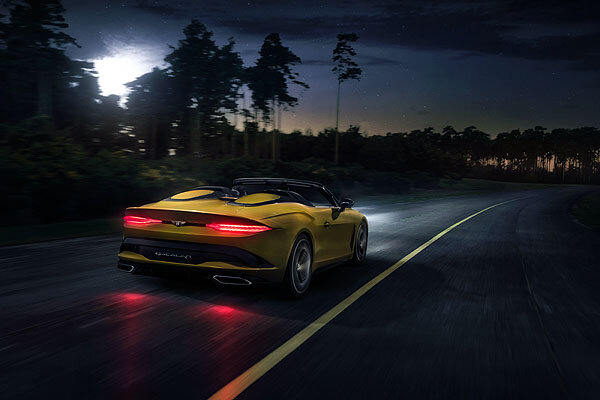
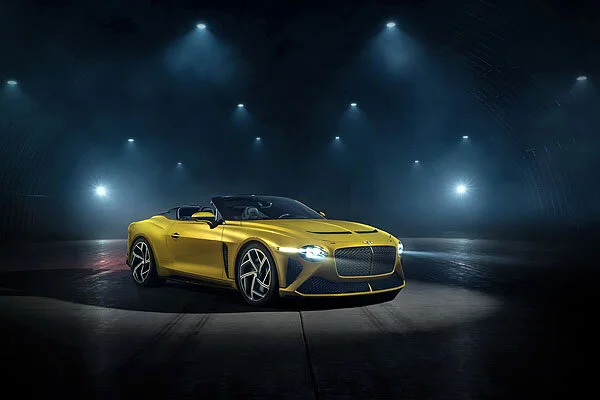
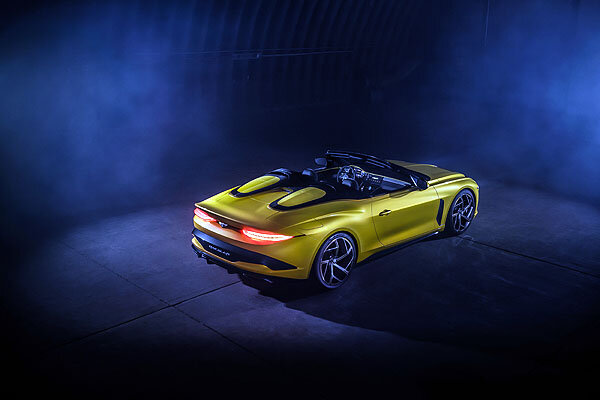
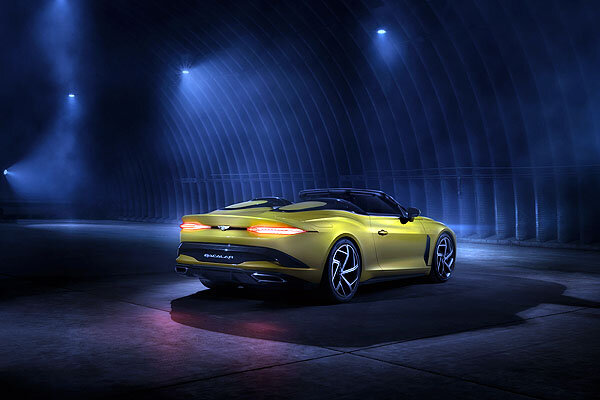
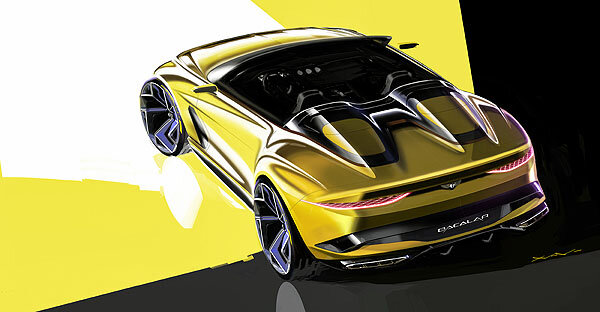
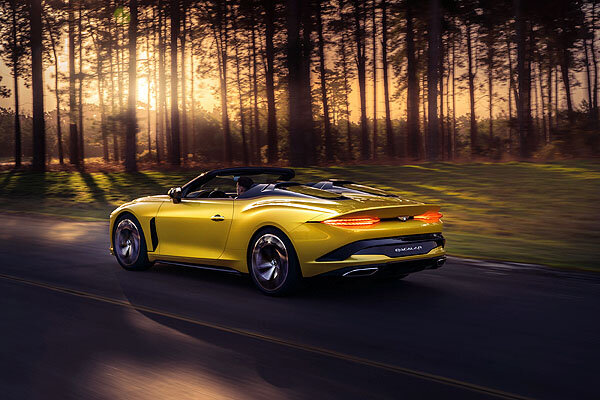
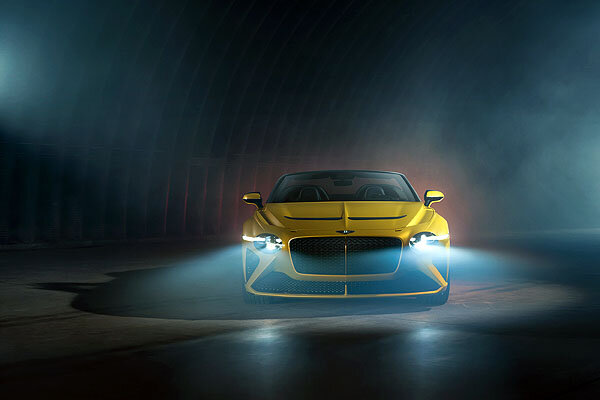
(Crewe, 3 March 2020) Bentley Mulliner has revealed the all-new Bacalar at the home of Bentley in Crewe, England this morning. The rarest two-door Bentley of the modern era, and the ultimate expression of two-seat, open-air luxury, this definitive Grand Tourer spearheads a return to coachbuilding by Bentley Mulliner – the oldest coachbuilder in the world.

Just 12 examples of this striking, limited edition model are being created, guaranteeing rarity and exclusivity, and offering supreme luxury and breath-taking performance. Bacalar looks to the future of bespoke luxury motoring - each model will be handcrafted in Bentley Mulliner’s workshop in Crewe, according to the individual customer’s personal tastes.

This exceptionally rare car is appropriately named after Laguna Bacalar in Mexico’s Yucatan peninsula, a lake renowned for its breath-taking natural beauty, continuing Bentley’s strategy of naming cars after remarkable landmarks which started with Bentayga in 2015.

Bacalar has been brought to life by Bentley Mulliner, reviving its specialism in providing rare coach-built cars to only a few discerning customers. A roofless Barchetta design with all-new and highly muscular coachwork, embracing a myriad of options and materials, each Bacalar will be truly unique, the result of direct interaction between the Bentley Mulliner design team and the individual customer.

The most exclusive two-door Bentley of the modern era launches a new Bentley Mulliner operation, and forms part of a new strategy for the world’s oldest coachbuilder that will see the division offer three different portfolios: Classic, Collections and Coachbuilt.

Bentley Mulliner has an illustrious history and can proudly trace its roots back to the 1500s when the company’s original focus was customising luxurious, horse-drawn carriages. The remarkable Bacalar is therefore the culmination of almost 500 years of expertise and heritage in the art of vehicle design.

Adrian Hallmark, Chairman and Chief Executive of Bentley Motors, comments:

“The Bentley Mulliner Bacalar is our ultimate expression of an open-top, luxury grand tourer, and of the immense capabilities of our team in Crewe.

“In Bacalar, we have created a fully bespoke Bentley, orientated towards a two seat open top experience, and carrying a number of the forward thinking elements of future luxury, first heralded in our EXP100GT as part of our Centenary celebrations last year.

“Bacalar is a rare and remarkable Bentley, and whilst clearly defined, will be an extraordinary and collaborative experience for just twelve discerning people who will now co-create, collect, drive and treasure one of twelve being built.

“Our customers are as excited as we are about Bacalar, as it brings our team and discerning enthusiasts together, to create the finest bespoke, hand-built cars, and push the boundaries of our imagination and capabilities.”

A masterpiece of craftsmanship, the Bacalar is a seamless fusion of materials with an intelligent curation of technology. It draws on design DNA from the beautifully sculpted, award-winning EXP 100 GT which was recently crowned ‘Most Beautiful Concept Car of the Year’ at the prestigious French Festival Automobile International and ‘Concept Car of the Year’ by GQ magazine.

A statement of purpose for the future, Bacalar now propels Bentley into a new century of extraordinary, as the design team has envisaged the most dynamically sculpted model to date. The dramatic, tapered cowls at the rear hark back to the Barchetta sports cars of old, whilst underlining the promise of a dynamic, driver-focussed adventure in a cosseting, cocooned environment.

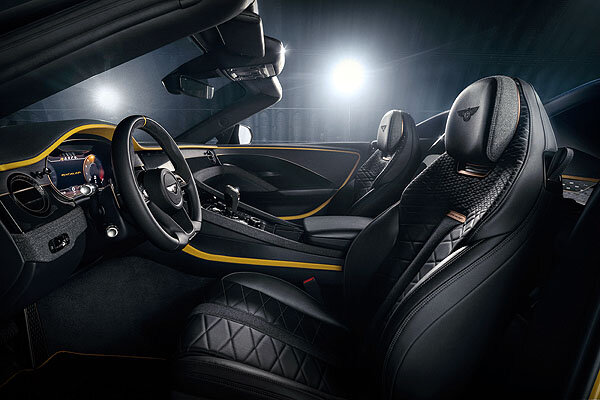
Pure in line and execution, the distinctive, wraparound cockpit flows from a new, steeply angled centre console seamlessly into the dashboard and doors. These then wrap rearwards towards the semi-enclosed luggage compartment behind the two seats.

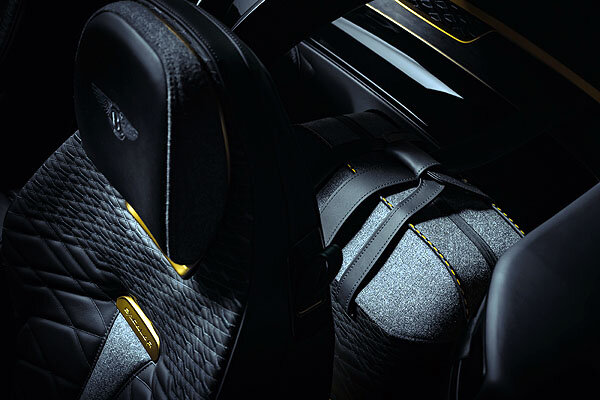
Sustainable, ethically-sourced materials previewed in the EXP 100 GT concept car last year have now become reality in the Bacalar – just eight months after first being previewed. These include paint containing ash from rice husks, which provides a sustainable way of delivering a rich metallic finish, natural British wool and 5,000-year-old Riverwood sourced from the ancient Fenlands of East Anglia.

The Bacalar features an enhanced version of Bentley’s peerless 6.0-litre, W12 TSI engine. The most advanced 12-cylinder engine in the world, it produces 659 PS (650 bhp) and 900 Nm (667 lb.ft) of torque.

An advanced Active All-Wheel-Drive System varies the torque split between front and rear wheels. It allows the Bacalar to use rear-wheel drive as much as possible during normal driving for optimum efficiency and dynamic performance. The drivetrain is at the heart of the Bacalar, creating the ultimate open-air, two-seat luxury Grand Tourer available in the world today.

All examples of the exquisite Bentley Mulliner Bacalar have already been allocated to customers from around the world.

Bentley Mulliner Returns To Coachbuilding

With the Bacalar, customers will again have the ability to work closely with a team of specialist designers to enhance their vehicle with a selection of unique materials and specially curated options. The Bacalar will be the first – but other new bespoke Bentleys will follow as part of the Bentley Mulliner Coachbuilt portfolio – one of three new divisions of the Bentley Mulliner organisation.

The Bentley Mulliner Classic offering was introduced last year with the announcement that Bentley’s 1929 Team Blower is to be reborn with a new build of 12 supercharged 4½-litre examples of the iconic car. These models, each individually handcrafted by a team of specialists from Bentley Mulliner, will form the world’s first pre-war race car continuation series. This subdivision of Mulliner also completed an immaculate restoration of the 1939 Bentley Corniche last year.

The third arm of the business – Bentley Mulliner Collections - will continue to offer customers luxury-focused derivatives of the core Bentley range, such as the new Continental GT Mulliner Convertible, as well as the opportunity to personalise their new Bentley.  An expansive number of options is available across the full line-up of current production cars – from unique colour-matched paint, hide and thread combinations, to bespoke feature content.

Tracy Crump, Bentley Mulliner’s Head of Commercial Operations, comments:

“While Bentley’s motto is ‘Be Extraordinary’, at Bentley Mulliner we look to take it one step further, ‘Beyond Extraordinary’. With the new Bacalar we have been able to do exactly that, providing a select number of customers with the opportunity to express their personal taste in a truly remarkable grand tourer. Meanwhile, Bentley Mulliner Classic will breathe new life into the most iconic cars from our past, while our Collections team continue their work to offer a bespoking service to each and every Bentley customer.”

Bacalar – A Dynamically-Sculpted Design For The Future

The new Bentley Mulliner Bacalar is a genuine ‘roofless’ Barchetta – a luxury, two-seat, open-air performance car, the likes of which has never been seen before. Handcrafted to the individual customer’s personal tastes, Bacalar is the ultimate expression of an open-top Grand Tourer: a spirited GT combining traditional handcrafted techniques with the latest cutting-edge technology.

The Bacalar shares no body panel with any other car in the Bentley model line-up and derives inspiration from the dramatic EXP 100 GT concept car conceived to mark the company’s centenary last year. Indeed, it only shares one exterior component with a Continental GT – the door handle, simply because it contains the keyless entry system.

Stefan Sielaff, Bentley’s Director of Design, comments:

“You can clearly see echoes of the EXP 100 GT in the Bacalar, as well as the influence of the past. Bentley has a rich history of open-cockpit cars – the design of the Birkin Blower Bentley of the late 1920s was also an inspiration. We needed to push the boundaries as far as possible – customers were asking what Bentley’s take on a more expressive-looking car at this price point would look like. We were also tasked with starting to deliver on Bentley’s promise to use sustainable materials. Within less than a year of revealing our future-focused concept, we have already delivered on this promise.”

The rear clamshell and top deck of the Bacalar are crafted from lightweight aluminium, while the doors and wings are carbon fibre. Combined with the use of three-dimensional printing, it has allowed designers to create an even more distinctive car.

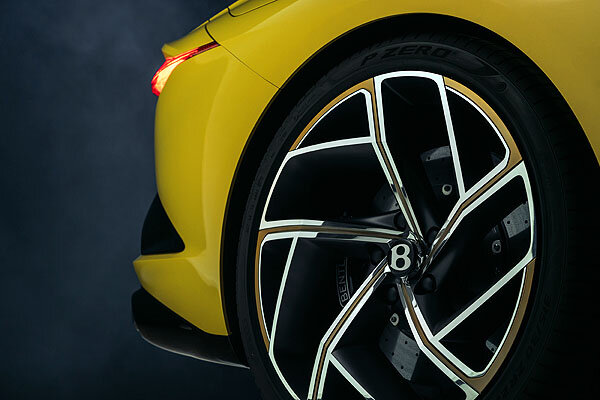
The Bacalar sits on extended haunches, with the rear track 20 mm wider than a Continental GT, to provide a more muscular, sporting stance. They house bespoke, 22-inch tri-finish wheels with dramatic depth and contour on the road. The unique front and rear horizontal lights add the distinctive, dynamic character that was first seen on the EXP 100 GT.

Instead of a traditional badge, Bentley designers went the extra mile to find a special way to identify the car. Uniquely, the Bacalar name appears on the rear panel, ‘hidden’ behind the lacquer of sustainable rice husk paint, with the capital ‘A’s influencing the contours of the lower bumper area.

The exterior look of each model will be completed in collaboration with individual customers, who are able to further personalise their car, choosing from rare paint options, exterior treatments and design themes. The Bacalar represents a return to the exciting early years of Bentley, allowing owners to help shape the car of their dreams.

A Unique Wraparound Cockpit

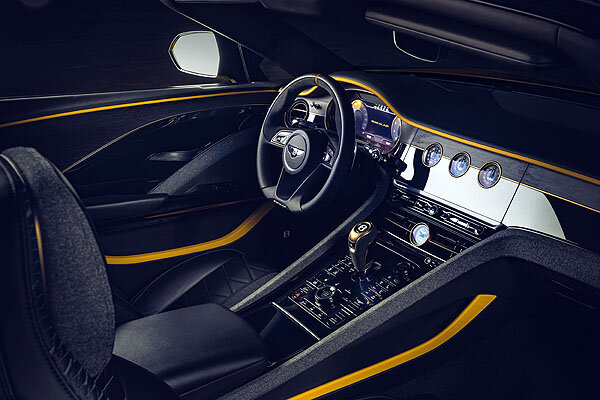
Inside the luxurious cabin, Bentley craftspeople have created a cockpit like no other. The architecture of the Bacalar has allowed Bentley Mulliner designers to seize the opportunity to create a theme that not only blends the interior and exterior together but also emphasises the two-seater character with a ‘wraparound’ cockpit design.

Pure in line and surface execution, the wraparound design flows from a steeply angled centre console into the dashboard, before sweeping into the door panels. These then wrap towards a uniquely styled, semi-enclosed luggage compartment behind the seats.

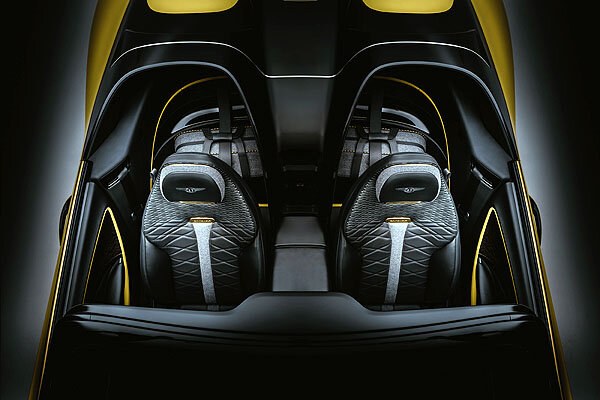
This ingenious space is purposely designed for bespoke Schedoni fitted luggage, the Italian company that has designed luxury luggage for the automotive industry for almost 140 years. Created exclusively for the Bacalar, the optional luggage perfectly matches the trim and materials of the cabin. These two luggage ‘pods’ flow from the interior into the exterior, enveloping the seats and creating a true two-seater cabin.

Uniquely designed details and features in the cabin emphasise the coach-built character of the car, with an almost infinite number of ways for customers to express their personal taste and commission a unique interior.

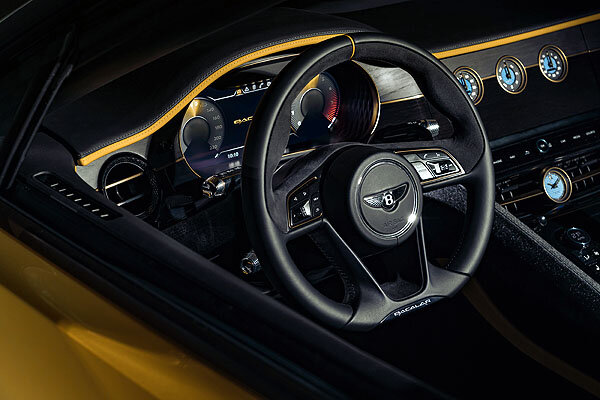
Every detail has been uniquely designed. A new, knurled pattern was created for the iconic ‘bullseye’ vents – a pattern that was repeated around the interior on areas like the steering wheel controls, media and climate controls and even the intricate speaker frets. Each element has a fine, Dark Bronze detail to further enhance the finish, with Midnight Black Titanium detailing.

The dark, anodised titanium finish on the main controls and a metallic dark bronze on the iconic Bulls-eye air vents have been used to highlight further details.

The interior can be finished in any number of ways, with each car co-created and commissioned in conjunction with the Bentley Mulliner team. Every car will be individually specified and finished using any of the many Bentley colours and materials available.

The finest Beluga leather is carefully sewn together with Bentley’s heritage semi-gloss leather and natural wool to create a dark ‘tone-on-tone’ character. For the first demonstration car, the use of Bentley Mulliner’s Khamun accent leather highlights the wraparound cabin theme and matches the new and unique Yellow Flame exterior paintwork perfectly.

Every element that falls to hand has been specifically designed for the Bacalar. A new D-shaped steering wheel features Alcantara inserts, with a contrast accent top marker. The gear-shifter is also finished in Alcantara with Dark Bronze detailing. Unique leather strap door and seat releases, unique digital instrumentation and a unique key design enhance the luxurious cabin still further.

At the heart of the centre console is the now famous Bentley Rotating Display. This digital MMI display has been elegantly designed by Bentley with a customer-configurable home screen. The system involves 40 moving parts and revolves the Riverwood veneer when the engine is started to reveal the high-resolution touchscreen.

Three configurable windows are able to display the driver’s preferred functions, such as telephone, media and navigation. The interface is designed to operate like a modern smartphone, with menus that are structured and simple to follow. The third side of the Bentley Rotating Display presents three, elegant analogue dials that display outside temperature, a compass and chronometer – providing an alternative to the touchscreen when the driver wants to digitally detox.

Each car also features a unique clock face with individual one-of-12 badging.

Owning a Bacalar is the start of a journey of discovery for the owner. Every element has been carefully and meticulously designed with a depth so great that over the course of time, each customer will discover new and interesting details.

From the use of precious inlays and unique finishes to the driver controls, to the 148,199 individual stitches needed to embroider the unique Bacalar quilt on each seat, owners will find details and parts not seen before on a Bentley.

Sustainable Craftsmanship And Ethically-Sourced Materials

Bentley has entered into collaborative relationships with carefully selected industry experts to create the new Bacalar. Each one uses sustainable and innovative techniques that exemplify the best craftsmanship that the world has to offer, in many cases fine-tuned over centuries, and using ethically-sourced materials.

A focal point of the cabin is the wraparound dashboard cut from rare Riverwood, a sustainable wood from naturally fallen trees that has been preserved for 5,000 years in peat bogs, lakes and rivers found in the Fenlands of East Anglia, England.

This exquisite wood was chosen for its striking black aesthetic, the result of lying untouched in wet earth for thousands of years. The wood has been air-dried in a controlled environment over a long period of time to prevent damage and conserve its unique, natural characteristics. The straight grain enhances the Bacalar’s sweeping interior contours, giving it genuine soul and drama.

Once veneered, the dashboard is literally sliced in two, creating an upper and lower element divided by a 3mm chrome strip. The upper Riverwood is finished as open pore – a semi-matt finish that shows off the veneer’s grain and colour.

The lower panels are a high gloss finish but with a modern twist to the traditional process. The Bacalar’s lower dashboard blends seamlessly from veneer into a high gloss piano black, further underlining the unique and bespoke finishes that are available. Because the Bacalar has no roof, this stunning marquetry is clearly visible from outside the car.

Bentley Mulliner has also collaborated with a traditional British textile mill to produce bespoke natural wool cloth akin to a fine tailor’s suit. Bentley Mulliner has embraced the expertise and knowledge of these centuries-old methods to create an exclusive and unique woven cloth especially for the Bacalar, and customers will have the option to co-create their own bespoke fabric blend.

This traditionally-produced textile is used in the seat inserts, seat backs and the side of the head restraints. Following the interior styling lines, it also flows from the side of the centre console and lower instrument panel into the doors.

Further promoting sustainable craftsmanship and supporting a unique industry, the luxury overmats are precision woven on traditional Wilton looms in England using the finest natural yarns.  These Wilton-woven pure wool deep pile carpets are hand-carved for the footwell and rear luggage compartment, following the embroidered pattern found on the seats.

Thanks to a partnership with another local supplier, based in the nearby Peak District, the Bacalar also offers customers the rare opportunity to create individual artisan piping, chosen to enhance the dynamic styling lines of the seat architecture. This piping can be designed and customised to feature unique patterns, colour combinations and personal embossed effects, such as a customer’s signature or special, individual customer motifs.

Even the paintwork on the Bacalar has been specially chosen for its sustainable characteristics. The pigment reflects an eye-catching transition of colour that intensifies the drama, form and contours of the sculpted exterior in different lights.

The pigment is synthetically-manufactured silicon dioxide platelet coated with iron oxide. This synthetic process uses rice husk ash – a by-product from the rice industry – to create 90 per cent pure silicon dioxide, thereby reducing rice husk landfill waste.

Each Bacalar will be hand-crafted in Mulliner’s dedicated workshop at the Bentley factory in Crewe – the world’s first certified carbon neutral factory for luxury car production.

A Unique Driving Experience

The Bentley Bacalar combines bespoke, hand-crafted luxury with state-of-the-art technology to guarantee an extraordinary driving experience.

With all-new coachwork brought to life by Bentley Mulliner, at the heart of the Bacalar is Bentley’s renowned 6.0-litre, twin-turbocharged W12 TSI engine mated to a technically-advanced drivetrain.

The Bacalar’s dual-clutch, eight-speed transmission offers faster, more efficient gear changes. An adaptive chassis uses Bentley’s intelligent, 48-volt Dynamic Ride System to ensure a responsive ride and exceptional handling and refinement in all conditions.

The air suspension system controls ride comfort and lateral roll, cushioning passengers from excessive movement, as well as making the Bacalar feel effortlessly precise.

The Legend Of Mulliner

The legend of Mulliner is woven into the very fabric of Bentley. The tradition of bespoke craftsmanship has been passed down from generation to generation since the 1500s, when Mulliner was founded as a saddler.

In the 1760s, the Mulliner family business refocused on coachbuilding and rose to prominence when it was commissioned to build and maintain carriages for the Royal Mail postal service. With the arrival of the motor car, the company stepped away from horse-drawn carriages and focussed on coachbuilding for mechanical propulsion.

The then independent Mulliner crafted a bespoke, 3-litre, two-seater Bentley for the 1923 Olympia Show in London, creating a bond between the two companies that would last for decades. Mulliner bodied over 240 Bentley chassis in the 1920s alone and became renowned as the very best of the new coachbuilding firms.

Perhaps the most famous was Mulliner’s design for the 1952 R-Type Continental, still considered one of the most beautiful cars of all time. The fastest, four-seat sports car of the era, the R-Type’s iconic beauty continues to influence design today through the Bentley Continental GT.

Mulliner cemented its partnership with Bentley in 1959 by becoming part of the business. It later moved into the old engineering experimental department at Bentley headquarters in Crewe and has remained there ever since. Today, around 40 employees, ranging from specialists with over 40 years of Mulliner experience to apprentices learning the skills that have been honed over decades of manufacturing, work for the company.

In automotive, builder, youtuber Tags Bentley, Bentley Mulliner, Bacalar
Comment
Techrules Ren RS.jpg

REN SUPERCAR PRODUCER TECHRULES AIMS TO BECOME THE WORLD’S LARGEST MANUFACTURER OF MICRO-TURBINE GENERATORS

Mario Sousa March 2, 2020
  • Chinese automotive R&D company, Techrules, capitalizes on the vast potential of its innovative micro-turbine technology

  • Sales of 45 kW turbine will start in June, with mass production by the end of 2020

  • New strategy will prioritize applications for heating, cooling and power generation

Beijing, 25 February 2020 – The Chinese automotive R&D company, Techrules, best known for its revolutionary Turbine-Recharging Electric Vehicle (TREV) system in the Ren supercars, will start producing and selling a 45-kW turbine in small series in June 2020, with mass production expected to commence by the end of this year. The 45KW turbine runs on renewable fuels and can be used as a stand-alone power generator to provide electricity,

heating or cooling wherever it is needed. A smaller 15 kW turbine will follow in 2021, specifically developed for use as a range extender in passenger cars, while the 45 kW version is more suitable for use in commercial vehicles since these require more power.

At the Geneva  International Motor Shows of 2017 and 2018, Techrules showcased its patent-protected series hybrid powertrain technology comprising an 80 kW turbine-generator in the Ren supercars. TREV delivers unprecedented levels of efficiency and performance, and its environmental impact is ultra-low, especially when renewable fuels are used such as biogas, methanol or ethanol. Although the company still has plans to become an automotive producer, the key focus is on developing, producing and selling micro-turbines first.

Techrules Chief Technology Officer Matthew Jin.jpg

The inventor of the micro-turbine, Chief Technology Officer of Techrules, Matthew Jin, said: ‘Especially when it’s running on renewable fuels, our technology helps to fight global warming as it substantially reduces the output of CO2  by stimulating the cultivation of plants to produce biofuels. It is, therefore, no real surprise to us that the use of our technology as a range extender and also as a charging station for electric vehicles has created massive interest from companies and institutions around the world. As a range extender, the smaller 15kW and 45 kW turbines are more suitable for use in passenger cars and commercial vehicles, as opposed to the 80 kW version that we used in the Ren supercars. However, this will require co-development with interested OEMs which, in turn, will require massive resources from our end. That’s why we have decided to focus our efforts on the 45 kW turbine initially, which is almost ready for production here in China and for sales markets around the world.’

The 45 kW turbine can be used as a generator to provide heating, cooling, and electricity in remote areas or as a support and back-up for large power plants. The turbine is far more efficient than the diesel generators that are currently widely used because it runs efficiently on a variety of fuels including renewable fuels such as biogas, ethanol, and methanol. It also has a high tolerance of hydrous or low heat value fuel and requires hardly any maintenance.

To generate heat, the 45 kW turbine efficiently burns fuel such as ethanol, methanol or biogas to produce electricity and uses heat recovery devices to capture the heat from the turbine. This heat is converted into useful thermal energy, usually in the form of steam or hot water and used for purposes such as commercial buildings, residential areas, colleges and universities, hospitals, prisons, military bases, local energy systems, wastewater treatment facilities, schools, and production facilities. This reduces emissions and pollutants because less fuel is required to produce a given energy output, and the method cuts out the transmission and distribution losses that occur when electricity travels over power lines.

Matthew Jin: ‘The mass production of micro-turbines is only possible because of our innovative hybrid air bearing system. The fact that it can run on renewable fuels means that we can help to facilitate a smooth transition from the age of fossil fuels to the age of electricity, anywhere in the world. For us, this is an extremely meaningful way of helping to combat global warming and reducing CO2 levels in our atmosphere.’

Mathew Jin.jpg

Matthew Jin concludes: ‘We are currently in discussion with a number of potential customers in and outside of China. Selling the 45 kW turbine as a power generator will allow us to build up production volume quickly, which we expect to reach around 100,000 units over time. We are now finalizing negotiations with local municipalities regarding the site of the plant and are looking forward to starting production of the largest micro-turbine generator facility in the world.’

In automotive, builder Tags REN SUPERCAR, TECHRULES, MICRO-TURBINE GENERATORS
Comment
The 2020 SEMA Battle of the Builders® Young Guns Regional Competition, for builders ages 27 years or younger will kick off at the Heat Wave Spring Break Jam, March 7-8, in South Padre Island, Texas.

The 2020 SEMA Battle of the Builders® Young Guns Regional Competition, for builders ages 27 years or younger will kick off at the Heat Wave Spring Break Jam, March 7-8, in South Padre Island, Texas.

2020 SEMA BATTLE OF THE BUILDERS® YOUNG GUNS COMPETITION KICKS OFF DURING SPRING BREAK

Mario Sousa February 27, 2020

The 2020 SEMA Battle of the Builders® Young Guns Regional Competition, for builders ages 27 years or younger will kick off at the Heat Wave Spring Break Jam, March 7-8, in South Padre Island, Texas.

Read More
In automotive, motorcycle, racing, motorsports, builder Tags sema, semashow2020, sema BOTB 2020, young guns 2020
Comment
← Newer

Gear Vlogz Newsletter

TubeBuddy Affiliate Link

TubeBuddy Affiliate Link

Search Posts

Post Archive
  • Automotive News
  • News
  • Press Conference
  • automotive
  • builder
  • Off-Road
  • Racing History
  • SUV's
  • motor show
  • motorcycle
  • motorsports
  • racing
  • youtuber
  • Mobile Electronics & Tech
  • automotive artists
  • Charity
  • outbreak
  • Accessories
  • Trucks
  • Rally
  • Cinematography
  • E-Sports
  • Books
 

Featured Posts

Featured
Jan 27, 2021
GMC HUMMER EV Teams Up for Off-Road Extreme E Racing Series
Jan 27, 2021
Jan 27, 2021
Jan 26, 2021
Repeating History by Preserving, Restoring and Sharing Historic and Authentic Race Cars on Track
Jan 26, 2021
Jan 26, 2021
Jan 25, 2021
2021 Porsche Panamera Turbo S sets production sedan benchmark
Jan 25, 2021
Jan 25, 2021
Jan 24, 2021
New tasks for Bugatti Head of Technical Development
Jan 24, 2021
Jan 24, 2021
Jan 23, 2021
McLaren Automotive delivers 1,000th new vehicle in Canada
Jan 23, 2021
Jan 23, 2021
Jan 22, 2021
Goodguys Rod & Custom Association names Kahn Media agency of record
Jan 22, 2021
Jan 22, 2021
Jan 21, 2021
Volkswagen to end production of Golf for U.S. market
Jan 21, 2021
Jan 21, 2021
Jan 18, 2021
The driving force behind the Flying Spur V8
Jan 18, 2021
Jan 18, 2021
Jan 17, 2021
Bugatti Chiron Pur Sport – Delivery to Customers begins
Jan 17, 2021
Jan 17, 2021
Jan 16, 2021
Huber pays homage to the Lamborghini Aventador and reveals the ERA
Jan 16, 2021
Jan 16, 2021
 
Affiliate Disclaimer
Bluehost.com Web Hosting $6.95

Powered by GearHeads